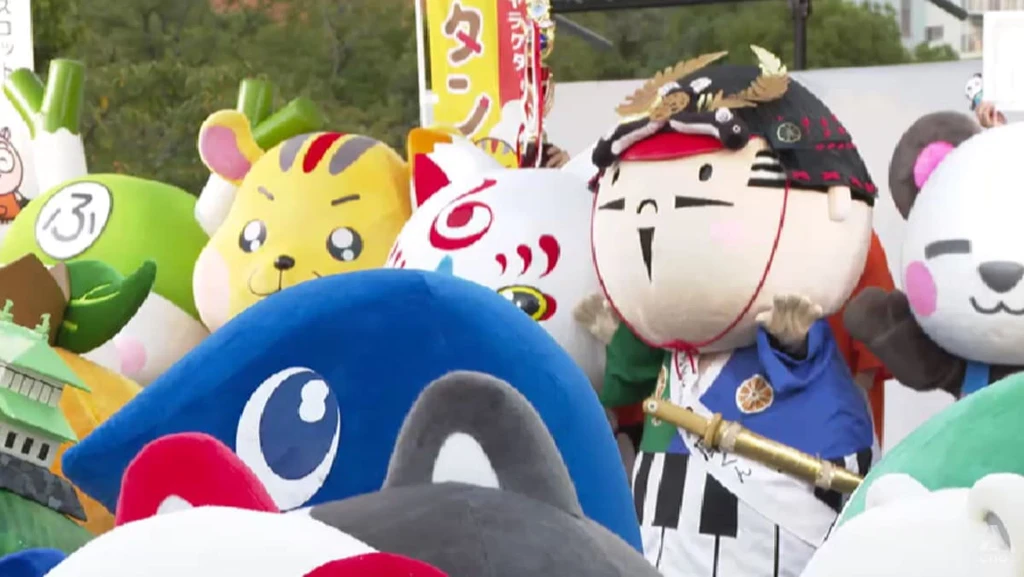
Japan’s yuru-chara-local mascots ranging from cuddly to bizarre-have evolved into a multi-billion-dollar industry. Thousands exist, each representing a town, business, or event.
The Yuru-Chara Grand Prix, launched in 2011 to aid post-tsunami recovery, fueled national interest. Revived in 2023 as “Yuruverse,” it now includes corporate characters.
Watapi, the orange bear of Nagano retailer Watahan, exemplifies how mascots boost brand recognition and sales.
But Kumamon stands apart. The black bear of Kumamoto Prefecture generated an estimated 1.62 trillion yen (US$10 billion) in merchandise sales from 2011 to 2024. Its image is free for local businesses promoting the region.
Kumamon is now expanding globally, with cultural exchanges in France and plans across Asia.
Meanwhile, Myaku-Myaku-the trippy, multi-eyed face of Osaka World Expo 2025-has already driven 124.6 billion yen in economic activity.
Yet most yuru-chara fade quickly. Sustaining popularity demands resources, talent, and consistent fan engagement-few achieve lasting success.