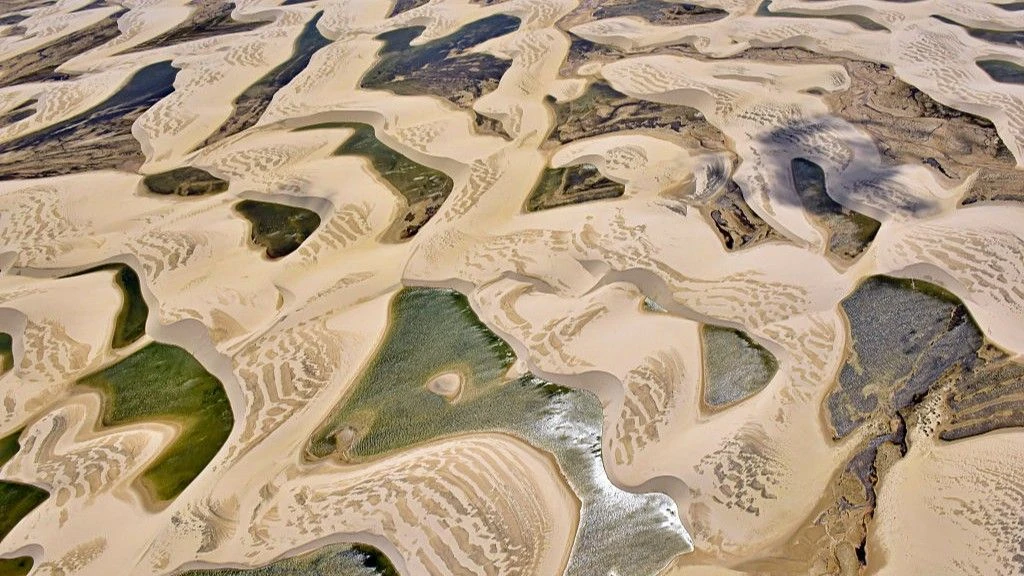
Lençóis Maranhenses National Park, located in the state of Maranhão, Brazil, spans 580 square miles and is known for its white sand dunes and thousands of temporary lagoons.
During the wet season, from January to June, rainwater fills natural basins between the dunes, creating freshwater lagoons. These lagoons vary in size, shape, and color, forming a unique ecosystem.
The park sits at the intersection of three biomes: the Amazon, the Cerrado, and the Caatinga. The Cerrado, a tropical savanna, is one of the best carbon sinks in the world, while the Caatinga is a semiarid region.
Wind shapes the dunes into large crescents called barchans, which can reach heights of up to 100 feet. The park is home to rare and endangered species, such as the neotropical otter, West Indian manatee, scarlet ibis, and oncilla.
The best time to visit Lençóis Maranhenses is between June and September, when the lagoons are full.