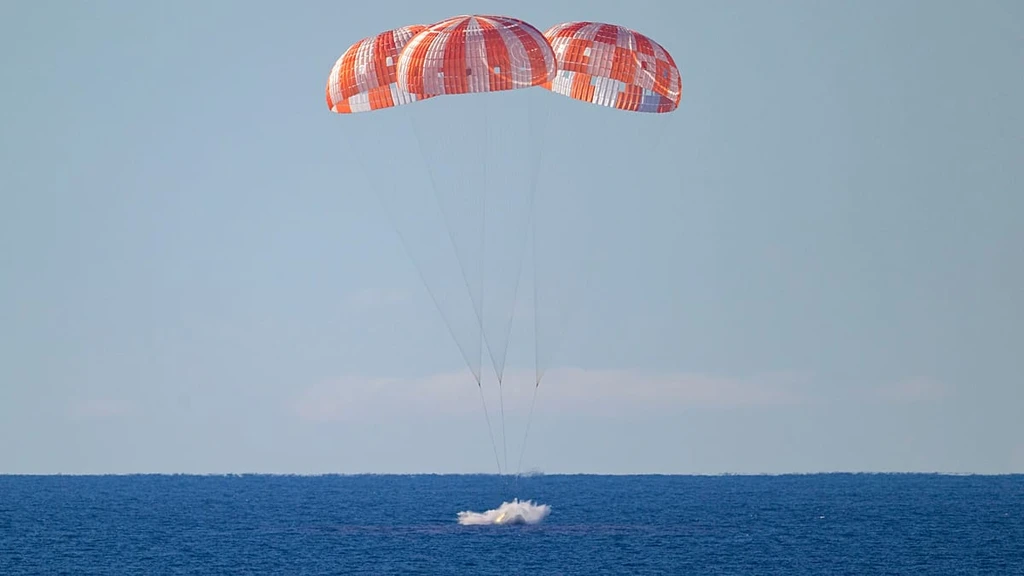
NASA's Artemis II astronauts have returned to Earth, concluding humanity's first lunar voyage in over 50 years with a dramatic splashdown in the Pacific. The mission set new distance records, offering unprecedented views of the moon's far side, a total solar eclipse, and Earth against the void of space.
This successful mission positions NASA for a lunar landing by another crew in two years and a full moon base within the decade. Commander Reid Wiseman, pilot Victor Glover, Christina Koch, and Jeremy Hansen emerged from their capsule, dubbed Integrity, off the coast of San Diego. Military helicopters transported the crew to the recovery ship, USS John P. Murtha.
NASA Administrator Jared Isaacman hailed the crew as "ambassadors from humanity to the stars." Mission Control erupted in celebration as the Orion capsule, traveling at Mach 33 during reentry, completed its automatic landing. The capsule's heat shield withstood extreme temperatures during the planned communication blackout.
The Artemis II mission, the first NASA lunar crew reentry since Apollo 17 in 1972, reached speeds of 36,174 feet per second. The diverse, multinational crew included Christina Koch, the first woman to fly to the moon; Victor Glover, the first Black astronaut; and Jeremy Hansen, the first non-U.S. citizen.
Launched on April 1, Artemis II did not land on the moon but broke Apollo 13's distance record, reaching 252,756 miles from Earth. The crew documented scenes of the moon's far side never before seen by human eyes and captured breathtaking images of Earth. Administrator Isaacman emphasized, "We are back in the business of sending astronauts to the moon... This is just the beginning."