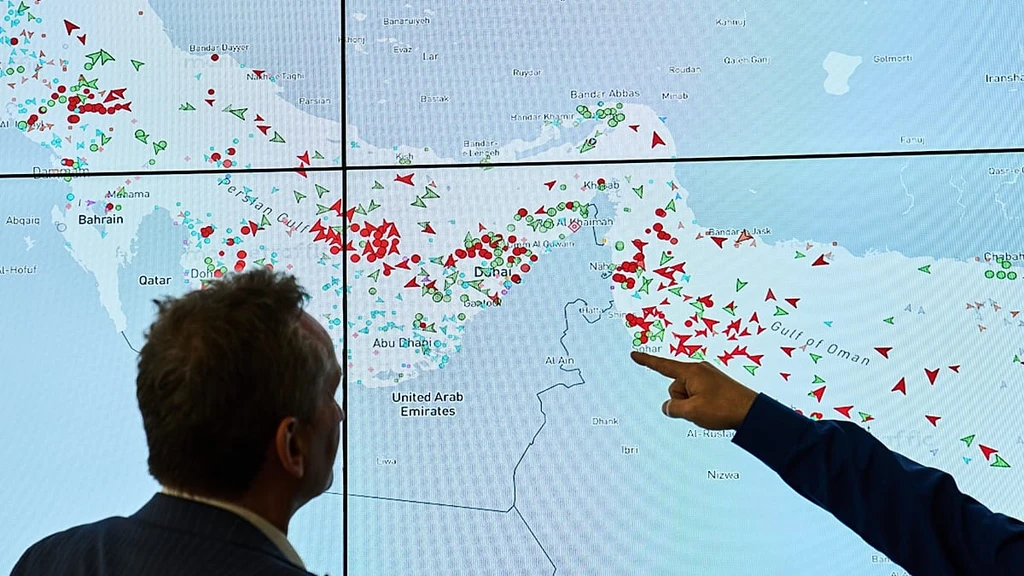
Oil tankers and cargo ships have started moving again through the Strait of Hormuz, President Donald Trump confirmed late Tuesday, forecasting the vital energy chokepoint will be fully open by Friday. The development follows a weekend ceasefire deal between Washington and Tehran that halted months of open conflict.
Iranian state media corroborated the movement, reporting three oil tankers and two laden cargo ships had safely transited the area previously under a US naval blockade. The White House had initially declared the blockade lifted on Sunday before clarifying that the formal reopening awaits the official signing in Switzerland.
Despite the renewed traffic, the governance of the 38-kilometer-wide strait remains fiercely contested. Iranian news agency Fars claimed the agreement includes a legal blueprint for joint management with Oman. However, this narrative is complicated by Tehran’s prior unilateral publication of a map claiming regulatory control deep into UAE and Omani territorial waters, and its assertion that it would collect transit fees with Muscat-a claim Oman firmly rejected.
Iranian Foreign Ministry spokesperson Esmaeil Baghaei later reframed the costs as standard maritime service fees rather than tolls. The strait normally handles one-fifth of global oil and LNG shipments.
President Trump characterized the deal as a powerful resolution, with a senior official confirming electronic signatures are already complete. Yet Iranian Foreign Minister Abbas Araghchi remained guarded, citing a history of broken commitments.
Negotiations addressed frozen assets and nuclear oversight. US Vice President JD Vance confirmed the agreement permits IAEA and US inspectors to monitor and assist in destroying Iran’s highly enriched uranium stockpile. The deal also requires Washington to ensure Israeli forces stop fighting in Lebanon, where Hezbollah remains an active combatant despite the ceasefire framework.