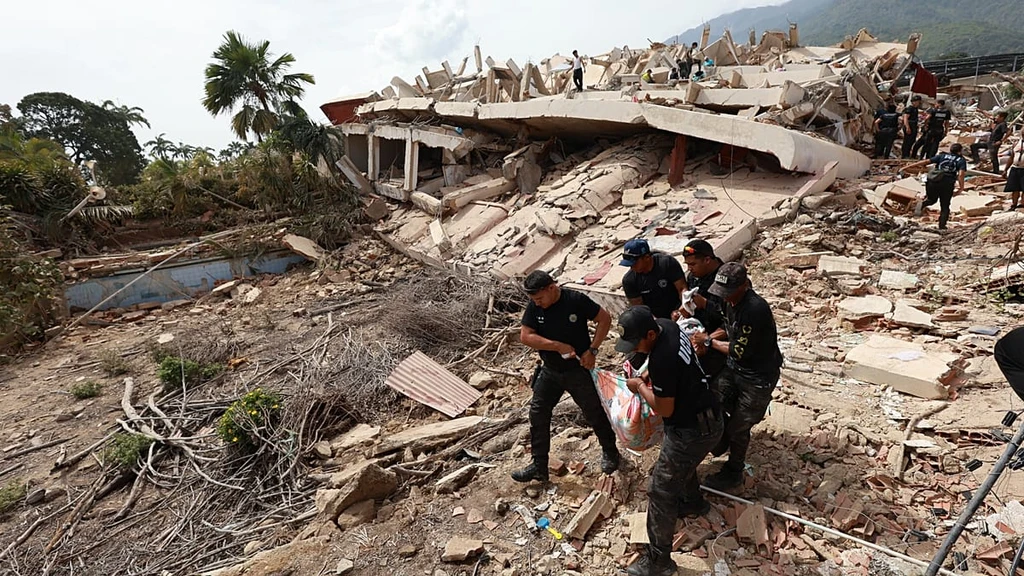
A rare seismic doublet has devastated Venezuela, turning a major earthquake into a rolling catastrophe. Seismologists identify a doublet as two powerful quakes of nearly identical magnitude striking in rapid succession at the same location.
The event occurred on June 24, 2026, in the state of Yaracuy. The first tremor registered as a 7.2 magnitude foreshock. Just 39 seconds later, a 7.5 magnitude mainshock followed. Both reached an intensity rated as 'severe' on the Modified Mercalli Scale.
This sequence is the largest instrumentally recorded seismic event in Venezuela this century. The extreme proximity in timing is unusual. Experts note the first quake likely triggered the second through a process called Coulomb stress transfer, where a rupture alters stress on nearby faults.
The overlapping seismic waves initially confused automated systems, which overestimated the magnitude at 7.8. Manual analysis later clarified the separate 7.2 and 7.5 events.
The destruction was amplified by several factors. Both quakes were very shallow, causing violent shaking at the surface. The cumulative stress from two major events compromised structures already damaged by the first. Many buildings in the affected zone, particularly unreinforced masonry, were highly vulnerable.
Damage was severe across a wide area. La Guaira state was hardest hit, with collapsed buildings and a damaged international airport. Parts of Caracas saw building collapses. The death toll has exceeded 235, with nearly 5,000 injured.
The disaster struck during a sensitive political transition following the arrest of former President Nicolás Maduro. International aid has arrived from nations including Spain, Colombia, and the United States, which has temporarily eased certain sanctions for humanitarian transactions.
Aftershocks are expected to continue for weeks, posing a continued threat to weakened structures.