
President Donald Trump has implemented a new 10 percent global tariff, but the majority of Canadian exports will be exempt. This policy change comes after the U.S. Supreme Court blocked his previous tariff plans.
A White House fact sheet confirms that goods compliant with the Canada-U.S.-Mexico Agreement on trade, known as CUSMA, will not be subject to the new levy. This exemption also applies to existing sector-specific tariffs on items like steel, aluminum, and automobiles.
The executive order enacting the worldwide tariff, signed Friday, begins Tuesday and is authorized under Section 122 of the 1974 Trade Act. This specific duty is limited to 150 days unless Congress approves an extension.
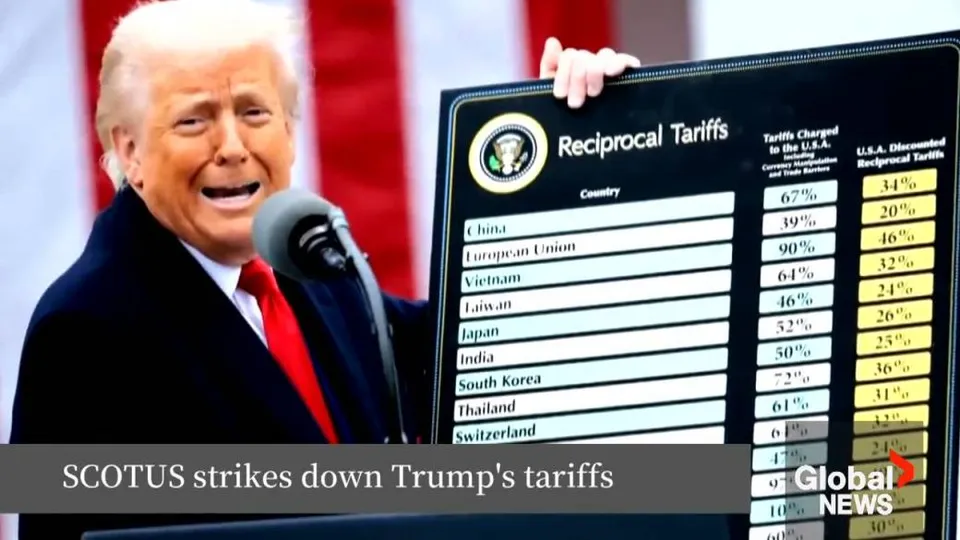
This action follows a U.S. Supreme Court ruling that found President Trump could not legally use the International Emergency Economic Powers Act for certain tariffs. The court concluded that the U.S. Constitution grants Congress, not the Executive Branch, the authority over taxes and tariffs.
Canada's Trade Minister Dominic LeBlanc stated the ruling reinforces Canada's position that the previously imposed tariffs were unjustified. While acknowledging the CUSMA carveout protects most Canadian exports, he noted ongoing efforts to support Canadian businesses affected by other trade measures.
Economists suggest the new tariff will have minimal impact on Canada's economy due to the CUSMA protections. However, concerns remain about potential future trade pressures and the upcoming mandatory review of the CUSMA agreement later this year, with President Trump having previously called the pact "irrelevant."