President Trump has claimed 'infighting and confusion' within Iran's ruling regime is hindering a deal to end the war with the U.S. and Israel. But analysts tell CBS News that while power structures are shifting, there is little evidence of divisions crippling Iran's leadership. They suggest Mr. Trump's rhetoric may be an effort to find a scapegoat for stalled diplomacy.
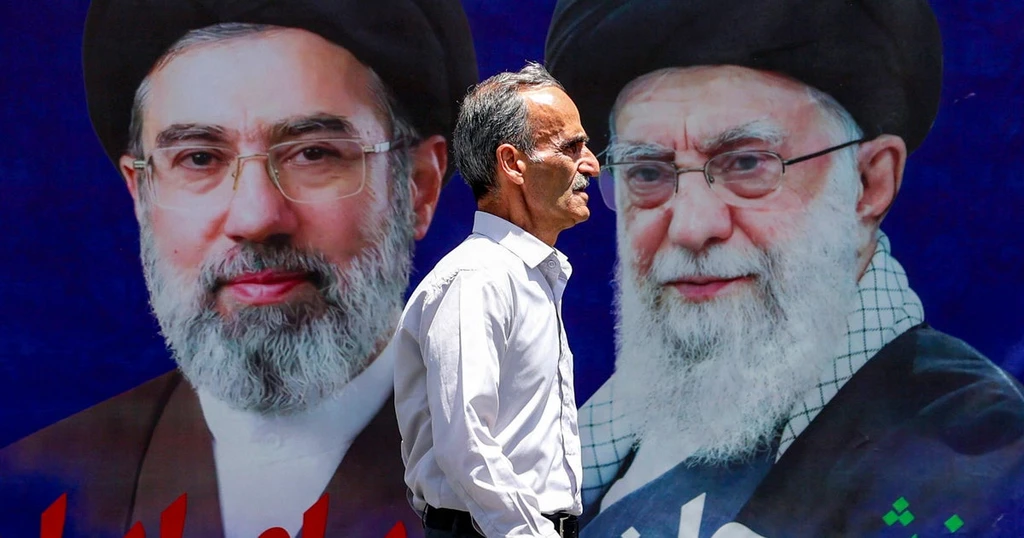
A month after former Supreme Leader Ayatollah Ali Khamenei was killed in U.S.-Israeli strikes, his successor, Ayatollah Mojtaba Khamenei, was announced but has not been seen publicly. U.S. officials claim he was seriously wounded. That invisibility fueled perceptions of a power vacuum, but the Islamic Revolutionary Guard Corps (IRGC) appears to have stepped in.
The IRGC, a military, political, and economic force that answered directly to the supreme leader, is now dominating military strategy and key political decisions. Analysts describe this as a transition 'from divine power to hard power,' with the supreme leader's role now largely to legitimize decisions made by IRGC generals.
Iran's leadership is factionalized on tactics, particularly over negotiations with the U.S. Moderate figures, including President Masoud Pezeshkian, favor a diplomatic solution, while IRGC hardliners project strength. However, analysts say all factions are aligned on the core goal: regime survival.
Experts argue the Trump administration may be exaggerating divisions as an excuse for slow diplomatic progress, noting that Washington itself is 'less aligned and less clear' on its objectives compared to Tehran, which has a singular focus on securing a permanent deal with guaranteed sanctions relief.