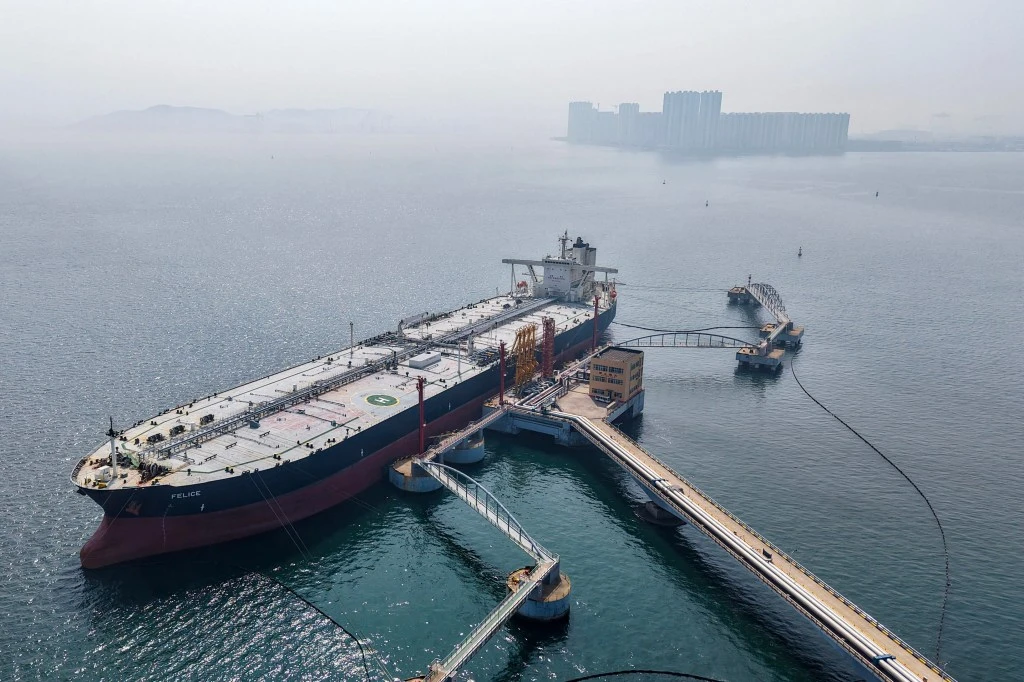
The Trump administration has authorized the sale of 140 million barrels of sanctioned Iranian crude, claiming it will stabilize global oil markets. However, critics argue the move risks strengthening Iran's financial grip and undermining U.S. strategic interests. The decision lacks transparency, with no reporting requirements or restrictions on payment channels, allowing China and others to continue buying Iranian oil at discounted rates.
Iran is also charging fees for ships passing through the Strait of Hormuz, a critical energy route. Some vessels have already paid up to $2 million per transit, with the Islamic Revolutionary Guard Corps (IRGC) enforcing the toll. Meanwhile, Iran may be shifting toward a yuan-based trading system, further complicating U.S. efforts to monitor and restrict its access to global markets.
Experts urge the administration to impose stricter controls, including an escrow mechanism to prevent revenue from reaching Tehran and requiring detailed transaction reports. With tensions rising, the decision highlights the delicate balance between economic stability and national security.