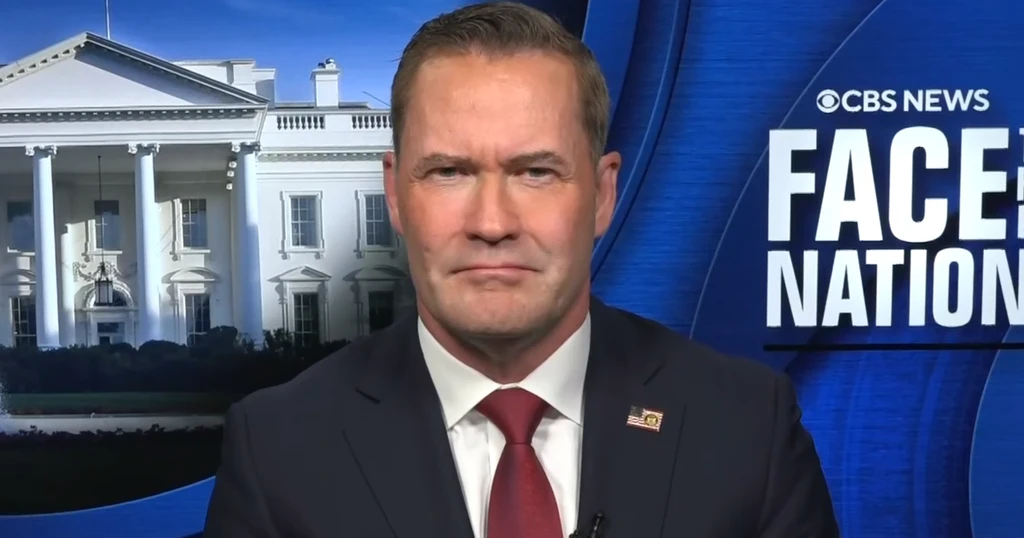
U.S. Ambassador to the United Nations, Mike Waltz, stated that Iran has been placed in a position of diplomatic isolation due to "devastating strikes on their leadership" and the U.S. Navy's control over maritime traffic.
Waltz indicated that the current talks are a continuation of previous terms offered by the U.S. Vice President, emphasizing that Iran "does not have the cards" and expressing confidence they will negotiate an end to their pursuit of nuclear weapons. He highlighted the success of "historic ceasefire talks" between Israel and Lebanon, and stable oil prices, contrasting it with Iran's "devastated" economy.
Addressing internal Iranian disarray, with conflicting statements from their foreign minister and IRGC, Waltz asserted that the Vice President's personal involvement signifies U.S. seriousness. He stressed that any agreement must be "verifiable and enforceable," with the International Atomic Energy Agency (IAEA) playing a key role in monitoring compliance.
Waltz also commented on President Trump's statements regarding Iran's alleged agreement to cease uranium enrichment and halt support for proxy groups, characterizing the Iranian regime as "slippery" and untrustworthy, citing past violations that led to the U.S. withdrawal from the JCPOA.
Regarding potential military actions, Waltz confirmed that "all options are on the table," including secondary sanctions on banks transacting in Iranian oil as part of "operation economic fury." He defended the targeting of IRGC-run infrastructure as legitimate military action, dismissing claims of war crimes.
On regional security, Waltz noted that Gulf Arab allies, including Bahrain, UAE, Qatar, and Saudi Arabia, have united against Iran's actions at the UN. He expressed disappointment that Russia and China did not support condemnation of Iran's attacks on civilian infrastructure.
Concerning Lebanon, Waltz highlighted U.S. contributions to the Lebanese Armed Forces and stated that with Iran weakened, it presents a "historic opportunity" for Lebanon to regain control. He pointed to the opening of Israel-Lebanon talks as a diplomatic success, backed by U.S. military strength.