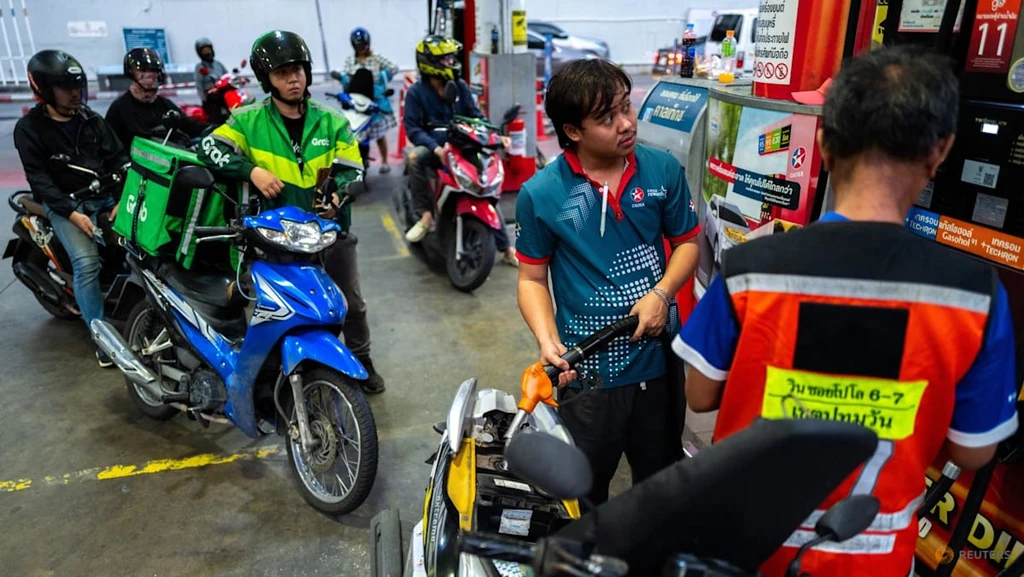
SINGAPORE: The Middle East conflict has triggered an economic crisis for Asia as the Strait of Hormuz closes, disrupting critical energy supplies.
About 20 million barrels per day of crude oil passed through the strait in 2025, with 80% bound for Asia. Nearly 90% of liquefied natural gas exports through the passage also targeted Asian markets.
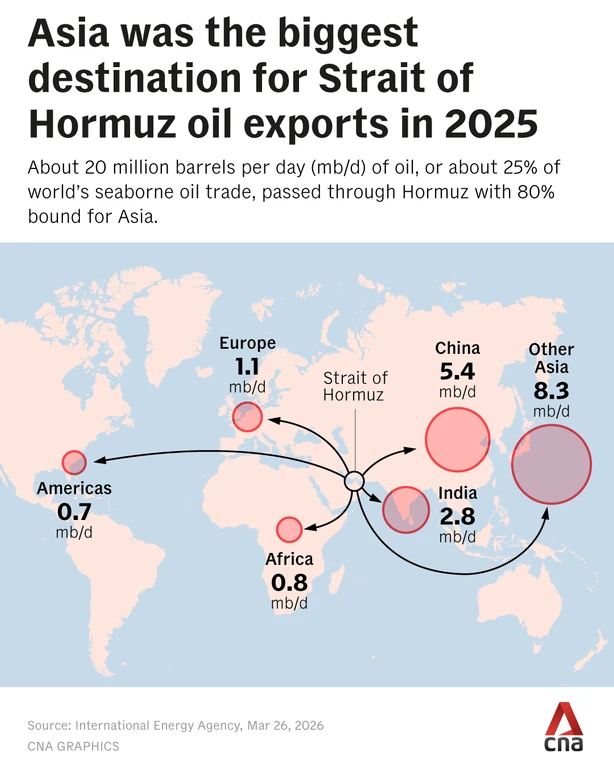
Singapore's Foreign Affairs Minister Vivian Balakrishnan called it an "Asian crisis" due to the geographic mismatch between conflict location and economic impact. Major Asian economies depend heavily on Middle East energy: India gets more than half its oil and two-thirds of LNG from the region, while Japan imports 95% of its oil there.
The US position has fundamentally changed since becoming a net energy exporter in 2019. America now produces more oil and gas than it consumes, creating a strategic advantage over energy-dependent Asian economies.
Beyond energy, fertilizer trade disruptions threaten food security as one-third of global seaborne fertilizer passes through the strait. Asian financial markets face persistent pressure if the crisis continues, with Singapore particularly vulnerable due to its 95% reliance on imported natural gas for electricity generation.