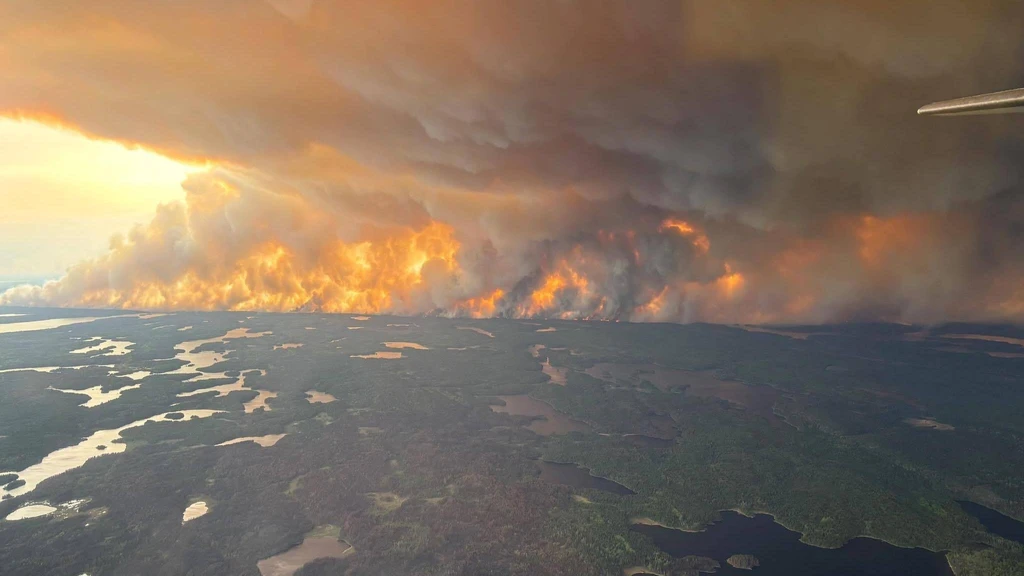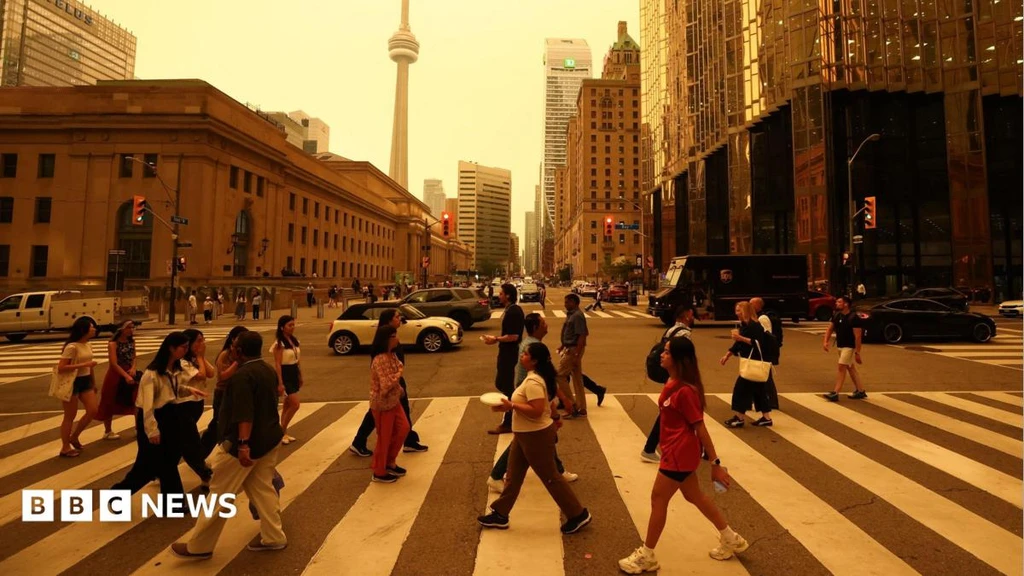
Intense smoke from hundreds of Canadian wildfires is blanketing major cities in the northeastern United States and Canada, creating a hazardous air quality crisis.
New York, Boston, and Toronto have issued public health warnings, urging residents to avoid strenuous outdoor activity. Officials are distributing N95 masks as the smoke contains dangerous fine particles that can penetrate deep into the lungs.
There are currently over 850 active wildfires burning across Canada, with nearly 200 in Ontario alone. In Minnesota, 17 fires are active under an emergency declaration. Evacuation orders are in place for six communities, with reports of damaged homes and infrastructure.
The fires are fueled by a persistent heat dome-an area of high pressure trapping hot, dry air. This extreme weather, linked to climate change, dries out vegetation, creating ideal conditions for fire ignition and rapid spread.
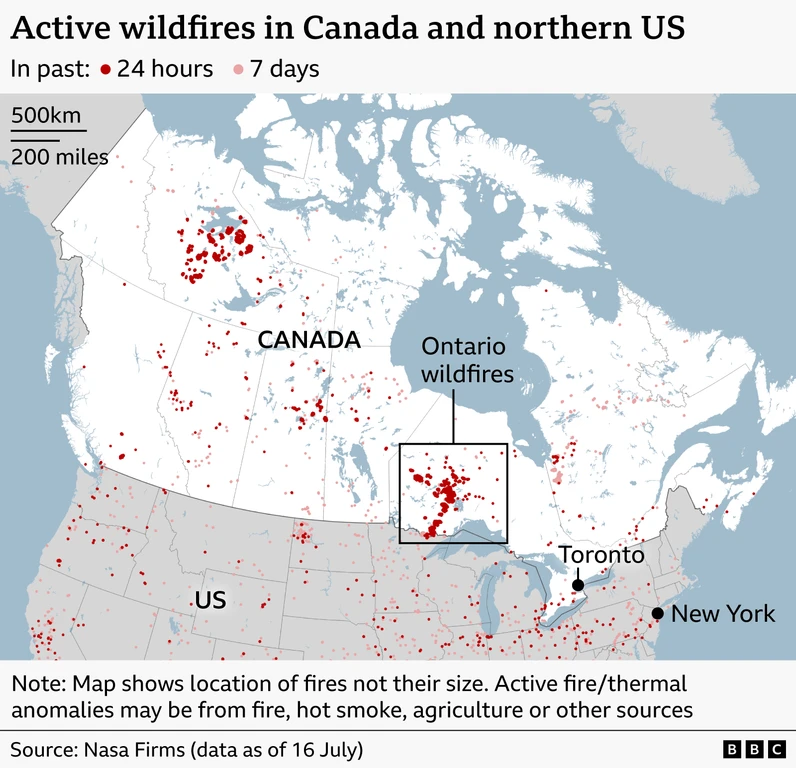
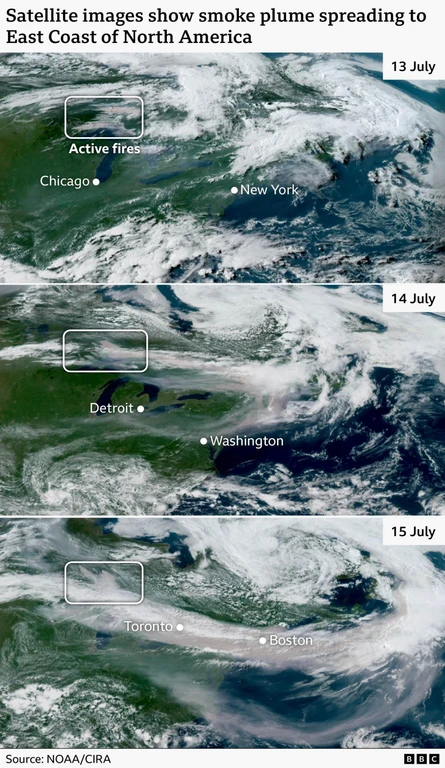
Satellite imagery shows the smoke plume moving southeast, affecting the Great Lakes region and the Atlantic seaboard. IQAir, a global air quality tracker, has ranked Detroit, Toronto, and Minneapolis among the worst in the world.
The health impacts are significant. The World Health Organization warns wildfire smoke can exacerbate respiratory, heart, and kidney conditions. Children and the elderly are most vulnerable. Public health officials advise staying indoors, closing windows, and using certified N95 masks.
Forecasters predict the smoke will linger through the weekend, potentially impacting major outdoor events, before a wind shift on Monday is expected to bring relief to US cities. The long-term fire risk remains elevated across Canada through August.
Wildfire seasons in Canada are intensifying. The 2023 season burned over 15 million hectares. Climate change is a key driver, causing hotter summers and milder winters, which dry out fuel earlier in the year.