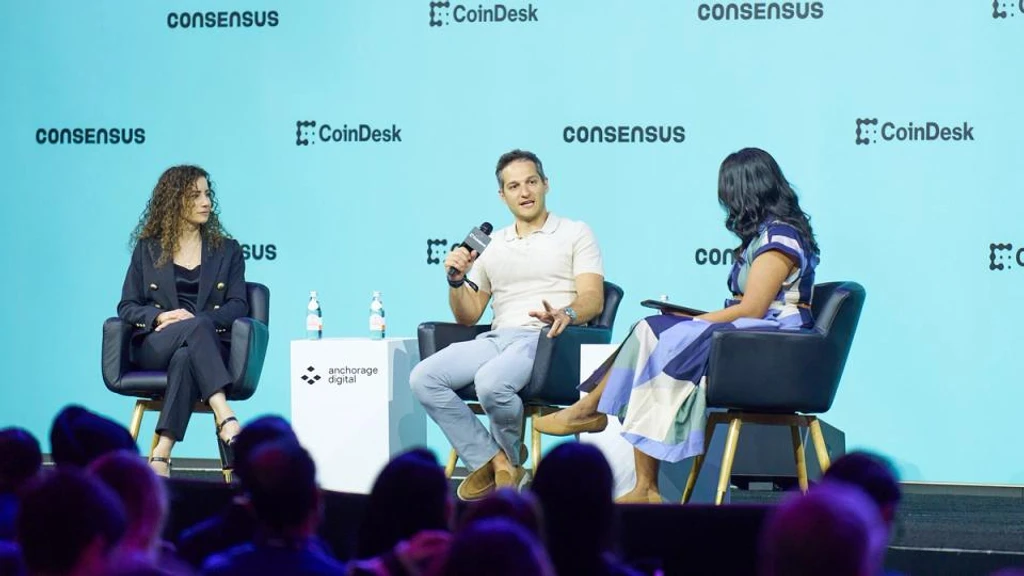
MIAMI BEACH - Senior figures from Google Cloud and PayPal told the Consensus Miami conference that the next wave of internet commerce will run on crypto rails because AI agents structurally cannot use traditional bank accounts.
Richard Widmann, global head of Web3 strategy at Google Cloud, said that existing internet user experience does not extend to autonomous agents. "An agent cannot get a bank account. It's not hard, it just is impossible," he said, citing technological and regulatory barriers. Crypto, by contrast, is "a fantastic machine readable interface for payments."
To address the gap, Google has launched the Agentic Payments Protocol (AP2), an open standard donated to the FIDO Foundation with more than 120 partners including PayPal. Widmann compared it to the x402 standard given to the Linux Foundation.
May Zabaneh, senior vice president and general manager of crypto at PayPal, said the company is treating agents as the next commerce channel after its evolution from offline to online to mobile. PayPal's stablecoin, PYUSD, is "a very natural programmable layer for payments."
Zabaneh cited a recent PayPal survey showing 95% of merchants now see AI agent traffic on their sites, but only 20% have machine-readable catalogs. "Merchants need to be ready for this next era," she said.
On liability, Zabaneh said the question of who is responsible if an agent makes a bad purchase is "definitely something that we have to think through as an industry." Widmann said multi-party custody is becoming central to agent design. Google has extended its Cloud KMS platform to cryptocurrency custody, arguing an agent should hold only one of two or three key shards rather than the full private key. "It cannot simply unilaterally move funds or take action," he said.
Widmann said the open question is "how do you onboard agents into all of the existing capital markets and infrastructure plumbing that powers payments and trading today."