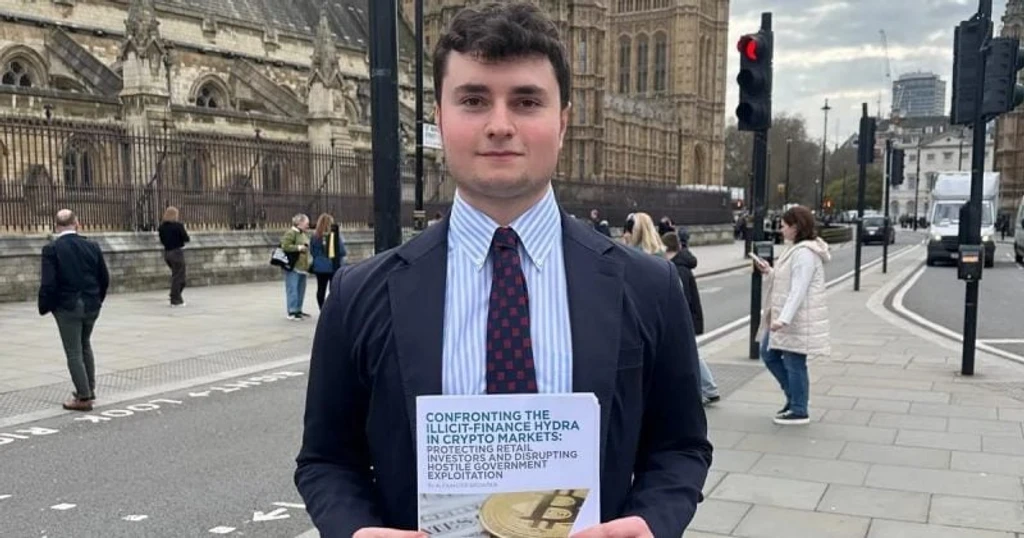
A 17-year-old British researcher has become one of the youngest individuals ever sanctioned by Moscow. Alexander Browder, founder of the Global Cryptocurrency Laundering Database, was added to Russia's sanctions list on June 3-4 for publishing a report detailing how Moscow allegedly uses digital assets to evade Western financial restrictions.
Browder called the sanction "a badge of honor," stating he has exposed Russia's "Achilles' heel."
His report, published March 3, 2026, through the Henry Jackson Society, analyzed 164 crypto laundering cases involving approximately $350 billion in illicit funds over two decades. Russian actors were disproportionately represented in that figure.
The centerpiece was a ruble-pegged stablecoin called A7A5, launched in January 2025, which processed over $100 billion in transactions within its first year. The report linked A7A5 to the already-sanctioned A7 LLC and Grinex exchange, as well as Promsvyazbank, a Russian bank on Western sanctions lists.
Browder subsequently presented evidence to the UK Parliament, elevating the findings into policy discussions.
Alexander is the son of Sir Bill Browder, the activist behind the Magnitsky Act, who has been a longtime target of Russian authorities.
The case highlights the risk of state-sponsored stablecoins operating outside regulated infrastructure, with exchanges touching ruble-denominated stablecoins or Grinex-related entities facing heightened compliance liability.