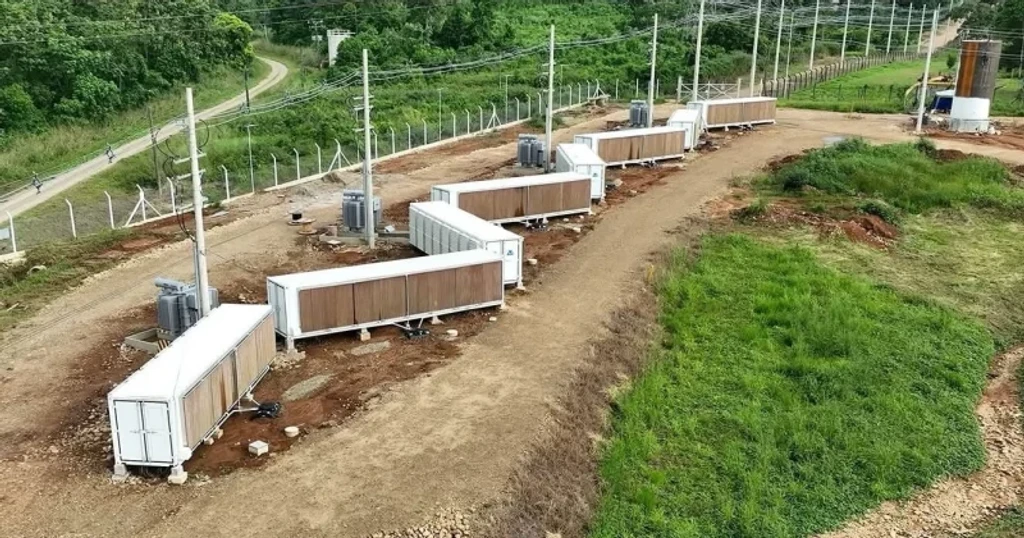
Bolivia's Bitcoin mining boom, once fueled by cheap natural gas, is pivoting to a more sustainable model as subsidies fade. Alps Blockchain, an Italian firm, has teamed up with local partner Qurubiqa to revive a 127 MW thermal power plant in Cochabamba that sat idle. The operation currently uses 27 MW to generate a hashrate of 1.23 EH/s, with plans to scale to full capacity under government contracts that include tax exemptions.
Bolivia's hashrate surged over 2,400% year-over-year by Q2 2026, driven by subsidized natural gas at $1.30 per MMBTU versus market rates of $8-$12. As those subsidies were pulled back, miners sought new energy sources. The Cochabamba plant, a stranded asset, now converts its dormant energy directly into Bitcoin mining revenue.
Payments for the operation are in US dollars, sidestepping Bolivia's fiscal crisis and boliviano instability. This aligns with the new right-leaning government's focus on attracting foreign capital, offering a template for dollarization via crypto mining.
Scaling to 127 MW could make this site competitive with mid-tier public miners. But risks remain, including Bolivia's history of nationalizing foreign energy assets and the potential for policy reversals.