
Galaxy's head of research, Alex Thorn, states that the current Bitcoin market cycle is significantly underperforming previous cycles following the April 2024 halving. Thorn's analysis indicates dampened volatility and less upside compared to cycles triggered in 2012, 2016, and 2020. Historically, BTC price increases after halvings have been substantial, with the 2012 cycle seeing a 9,294% rise and the 2016 cycle a 2,950% increase. The 2020 cycle saw a 761% jump.
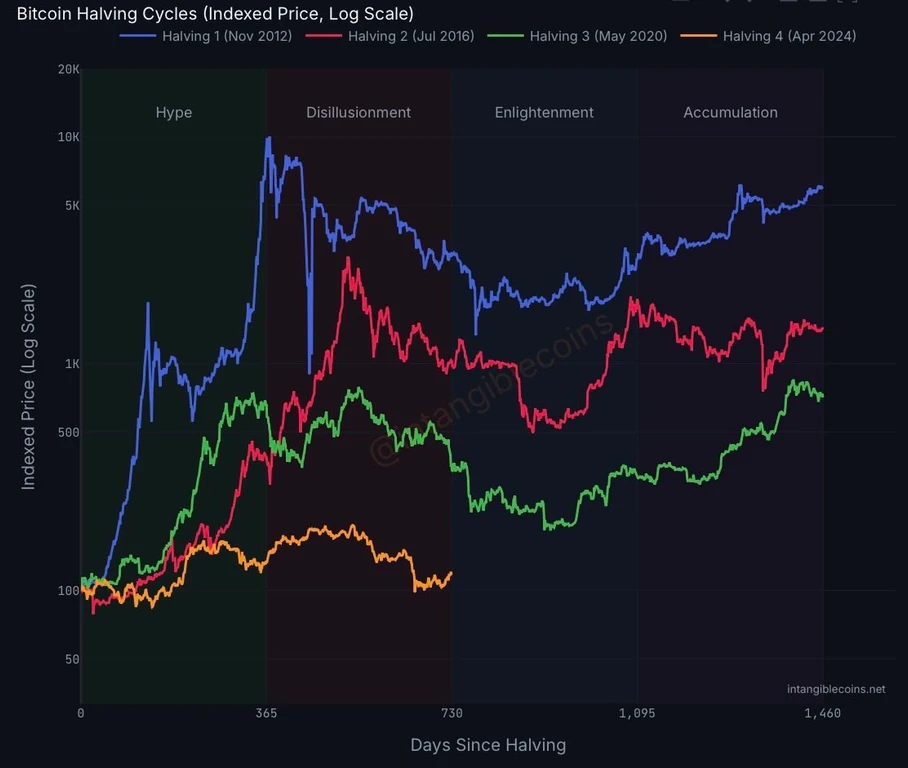
Thorn notes that the current cycle's all-time high, achieved around $125,000 in October 2025, was only 97% above the post-halving price of approximately $63,000. He questions whether this subdued performance is the new norm for Bitcoin.
Critics, however, point to the unprecedented event of Bitcoin reaching a new all-time high above $70,000 in March 2024, prior to the April halving, largely driven by the approval of spot Bitcoin ETFs. This pre-halving surge skewed the cycle's performance metrics. They also highlight that Bitcoin drawdowns have become less severe, with the recent dip to $60,000 representing a roughly 50% decline, less drastic than previous bear markets.
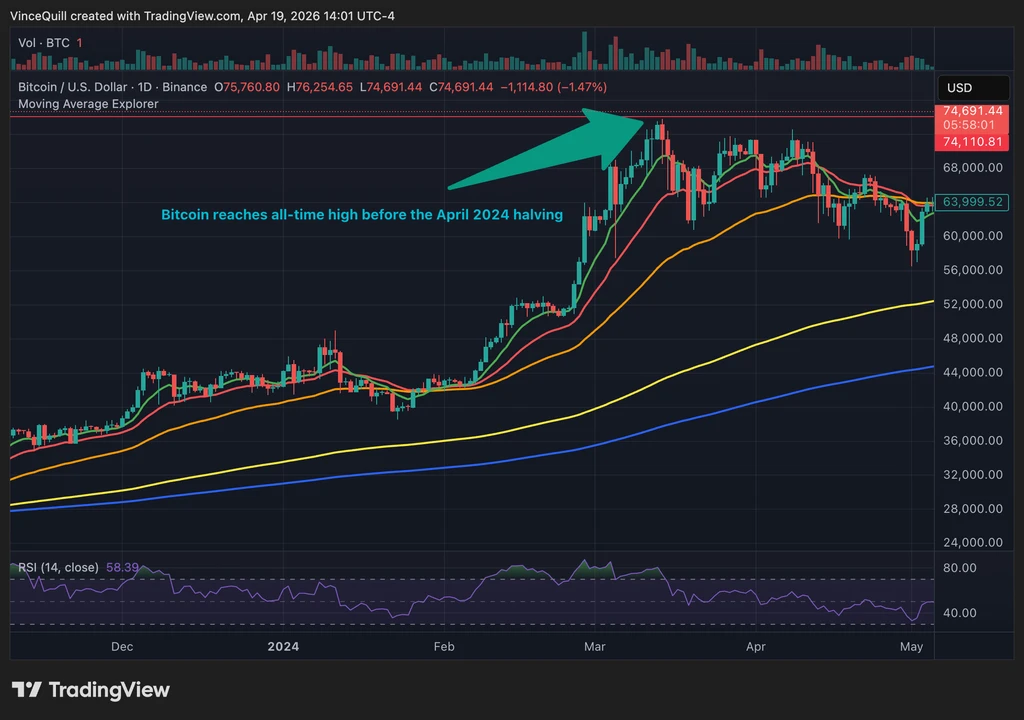
Fidelity Digital Assets research analyst Zack Wainwright observes that historical bear markets saw declines between 80% and 90%. At last report, Bitcoin was trading around $74,703, up nearly 5% over the past week.