
Bitcoin is holding around $70,000 despite recent geopolitical tensions in the Middle East, signaling potential resilience beyond traditional risk assets.
Over the weekend, markets reacted to former President Trump's failed push to reopen the Strait of Hormuz, sparking initial sell-offs across risk assets. But after reports of "productive conversations" eased fears, crypto stabilized.
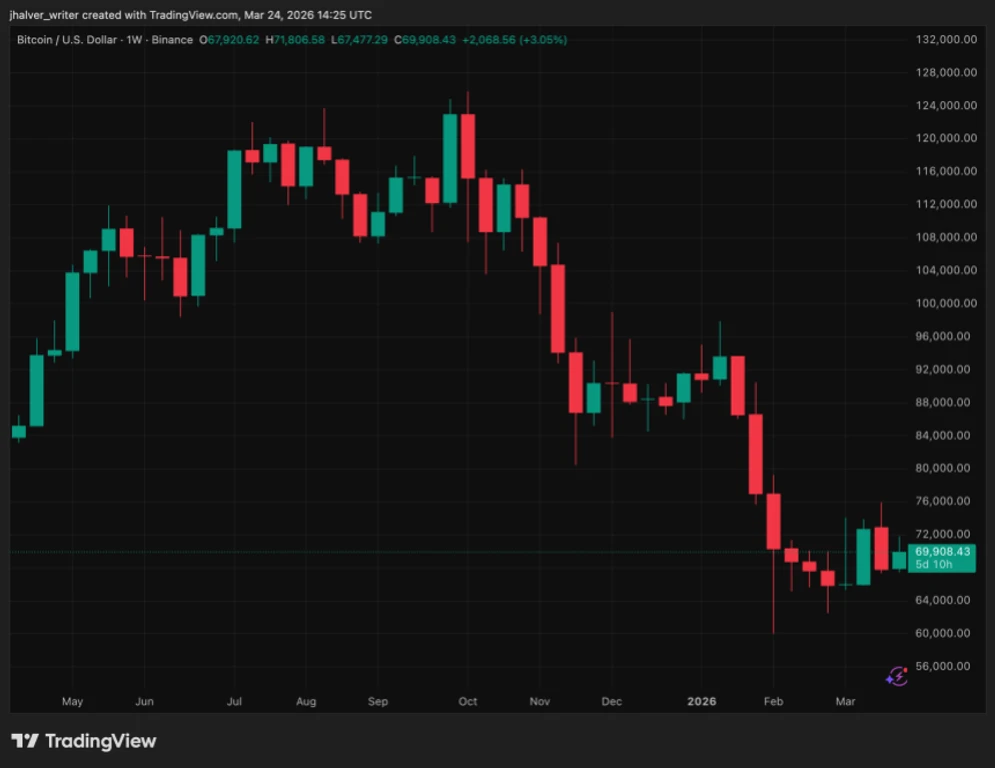
QCP’s latest analysis suggests bitcoin may be evolving into a "neutral escape valve" amid rising U.S. national debt-now exceeding $39 trillion-and growing stagflation concerns.
With a fixed supply of 21 million coins, bitcoin stands in contrast to fiat systems increasingly reliant on debt monetization and inflation. Analysts argue this structural difference could position BTC as a hedge against currency debasement and financial repression.
Iran’s proposal to allow yuan-based passage through the Strait adds to de-dollarization speculation, though the dollar remains dominant for now. Each crisis now tests whether bitcoin functions more like a growth asset-or something new in global finance.