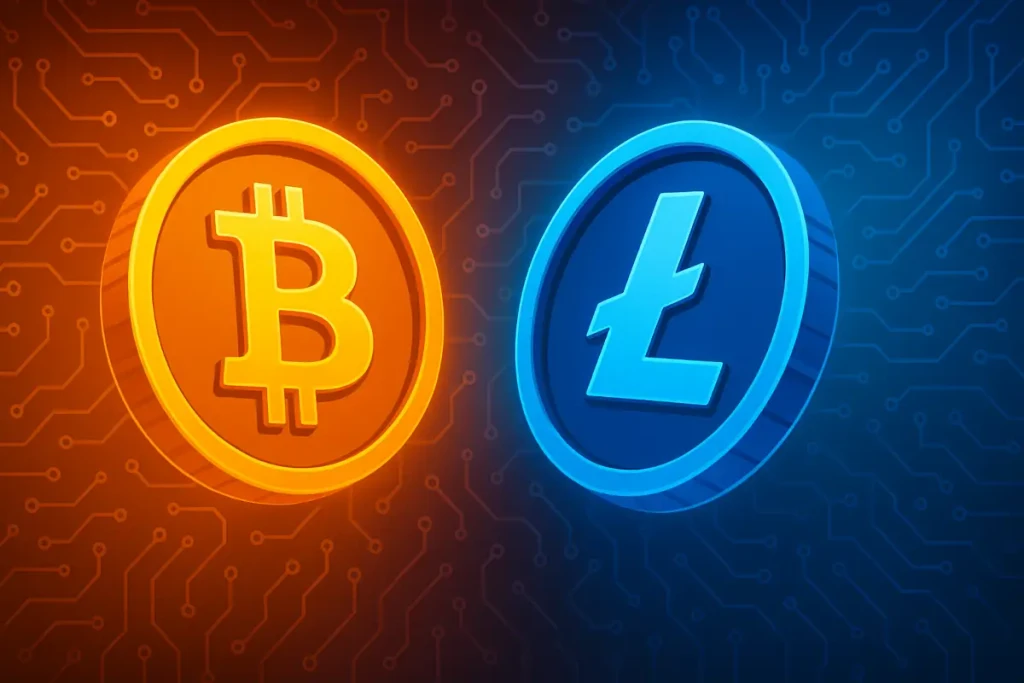
Cryptocurrencies have evolved significantly since Bitcoin's 2009 debut, yet older tokens like Litecoin, launched in 2011, maintain a strong presence. While sharing many features, both Bitcoin and Litecoin possess unique characteristics that define their roles.
Bitcoin, created by Satoshi Nakamoto, pioneered decentralized currency using blockchain technology and a Proof-of-Work (PoW) model. Miners validate transactions by solving complex puzzles, earning Bitcoin rewards. This system, governed by a 21 million coin supply limit, aims to prevent inflation and foster scarcity, positioning Bitcoin as a store of value and digital transaction tool.
Litecoin, developed by Charlie Lee, was designed as a faster, cheaper alternative for everyday spending. It also uses PoW but employs the Scrypt algorithm for mining, making it more accessible. With a block confirmation time four times faster than Bitcoin's and a larger supply cap of 84 million coins, Litecoin prioritizes transactional efficiency.
Despite these differences, both cryptocurrencies are decentralized, utilize public blockchains, and undergo halving events to regulate coin release. They share fixed supply limits and rely on miners for network security. Both are widely supported by wallets and exchanges, facilitating ease of use.
Bitcoin is predominantly seen as a store of value, akin to digital gold, due to its unmatched network security and market dominance. Litecoin, however, focuses on practical, everyday transactions, offering lower fees and quicker confirmations, making it suitable for micropayments and smaller purchases.
Scalability remains a common challenge. Bitcoin processes approximately seven transactions per second, while Litecoin handles around 54 TPS. Both projects leverage second-layer solutions like the Lightning Network to enhance performance. During periods of high network activity, Bitcoin may experience delays and higher costs, whereas Litecoin's network tends to remain more stable.
In the current digital asset ecosystem, Bitcoin leads in market capitalization, adoption, and institutional interest. Litecoin, though less prominent, serves a crucial role for users prioritizing speed and cost-effectiveness in transactional use, holding its own for faster, smaller digital exchanges.