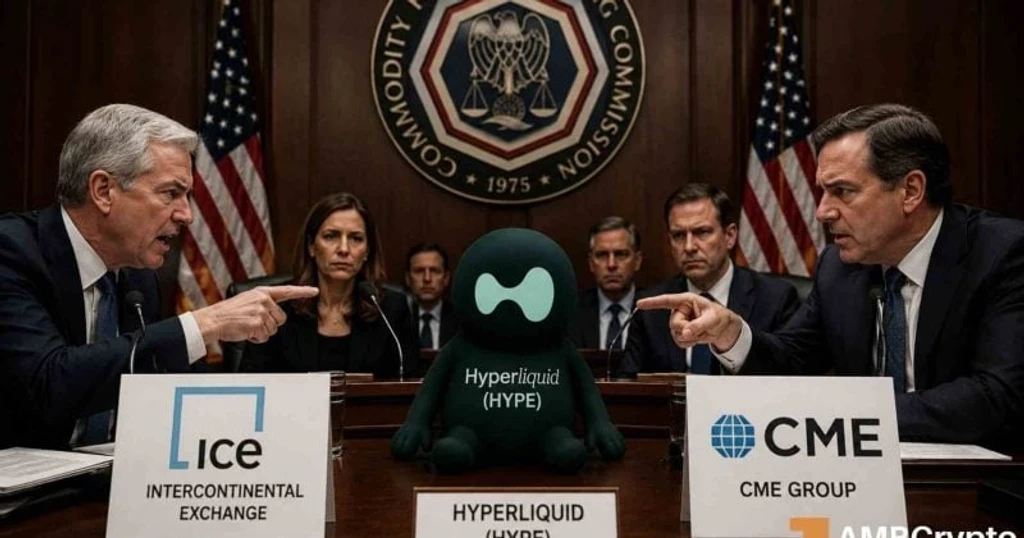
CME Group and Intercontinental Exchange, operator of the New York Stock Exchange, are lobbying the Commodity Futures Trading Commission to tighten regulations on Hyperliquid, the dominant on-chain perpetual futures exchange. They cite risks of market manipulation, sanctions evasion, and distortion of commodity price discovery.
The platform holds roughly 53% of decentralized derivatives fees with over $2.45 billion in open interest. The HYPE token fell up to 14% on the news.
Hyperliquid's infrastructure relies heavily on Circle's USDC stablecoin. Regulators could pressure Circle to restrict USDC flows, effectively draining liquidity without direct action against the protocol. Circle has a history of freezing addresses tied to sanctioned entities.
Jake Chervinsky, CEO of the Hyperliquid Policy Center, is seeking regulatory-compliant access for U.S. users.
For investors, this highlights a critical vulnerability: Circle's compliance posture makes it a potential chokepoint for platforms built on USDC. If access is restricted, rival exchanges using alternative stablecoins or collateral could gain market share.