
Decentralized, blockchain-based messaging and social media apps saw a sharp rise in global usage over the past year, driven by civil unrest and government-imposed communication blackouts across the Middle East, Asia, and Africa.
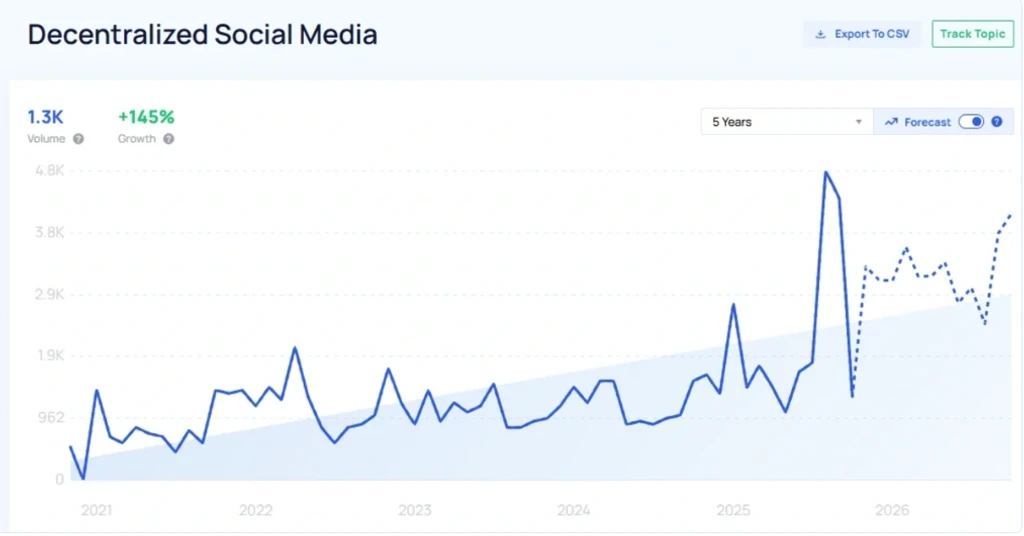
Search interest in decentralized social media has grown 145% in five years. Peer-to-peer app Bitchat reported download spikes during protests in Madagascar, Uganda, Nepal, Indonesia, and Iran.
Shane Mac, CEO of XMTP Labs, said users increasingly trust open protocols over closed corporate platforms. “When you see an entire country shut down single apps, it tells you that there has to be a new foundation,” he noted.
Unlike centralized services like WhatsApp-recently blocked in Russia-decentralized networks operate across multiple countries with no single point of failure, making them harder to censor.
Developers are already integrating protocols like XMTP into existing apps to bypass shutdowns. “The connection of mesh networks and decentralized networks meant the app is no longer the single point of failure,” Mac explained.
While market analysts predict strong growth for blockchain messaging, Mac cautions that decentralized apps won’t replace mainstream platforms but will coexist alongside them-much like email and SMS persist despite newer encrypted alternatives.