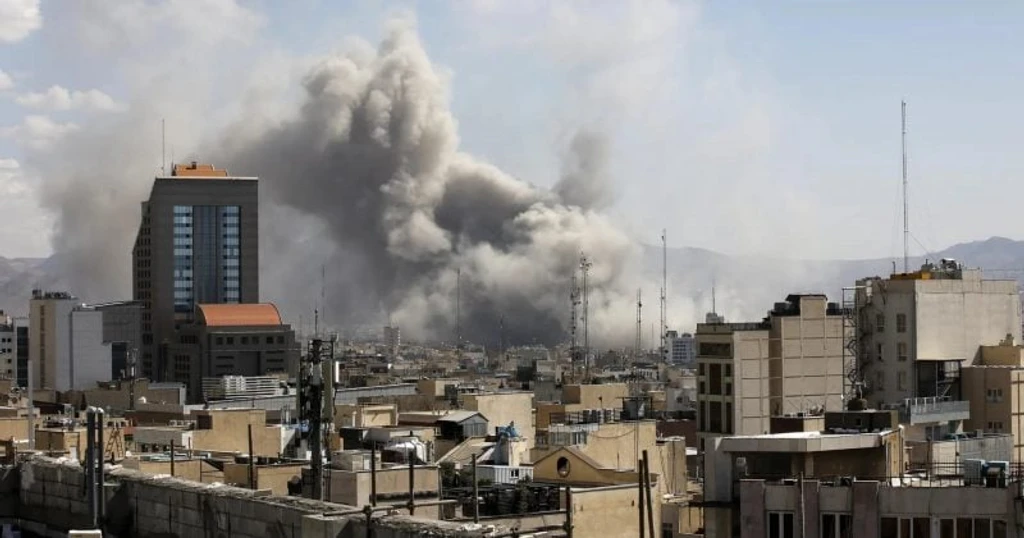
Explosions tore through central Tehran on June 8 as Israeli airstrikes targeted military installations across Iran, ending a fragile ceasefire that had held since April. Iran fired back, triggering air defense activations inside Israel and marking the most significant direct military exchange between the two nations in months.
Bitcoin, which had been trading above $63,000, quickly slid to roughly $62,900 as global risk aversion kicked in.
What happened on the ground
The strikes weren’t limited to Tehran. Explosions were also reported in Isfahan, Tabriz, and areas near Karaj, suggesting a coordinated Israeli operation aimed at multiple military sites in western and central Iran. Both sides confirmed the exchange of fire. Israel reported incoming missile activity and activated its defense systems, while Iranian state channels acknowledged strikes on several locations. Shortly after the initial volleys, both countries signaled a temporary halt in military operations. This was the first direct military confrontation since a ceasefire took hold in April 2026.
How crypto markets absorbed the shock
The drop from above $63,000 to approximately $62,900 might look modest in isolation, but the speed of the move matters more than the size. Within minutes of the first reports, sell pressure materialized across major exchanges as traders shifted into risk-off mode. Iranian-linked crypto platforms felt the impact most acutely. Nobitex, one of Iran’s largest exchanges, saw significant outflows, with approximately $10.3 million flowing out following earlier strikes in the broader conflict cycle. Meanwhile, prediction markets lit up as Polymarket saw increased trading on contracts tied to potential resolutions of the crisis.
What this means for investors
The outflows from Iranian-linked exchanges highlight a structural vulnerability. Platforms operating in or near conflict zones face acute liquidity risks during escalation events. Traders who keep significant funds on these platforms are exposed not just to market risk, but to operational risk: frozen withdrawals, network disruptions, or regulatory crackdowns. For crypto investors, elevated geopolitical risk means elevated volatility, and elevated volatility means wider spreads and faster liquidations.