
Google researchers have discovered quantum computers could break cryptocurrency blockchain encryption using fewer than 500,000 physical qubits, representing a 20-fold reduction from previous estimates.
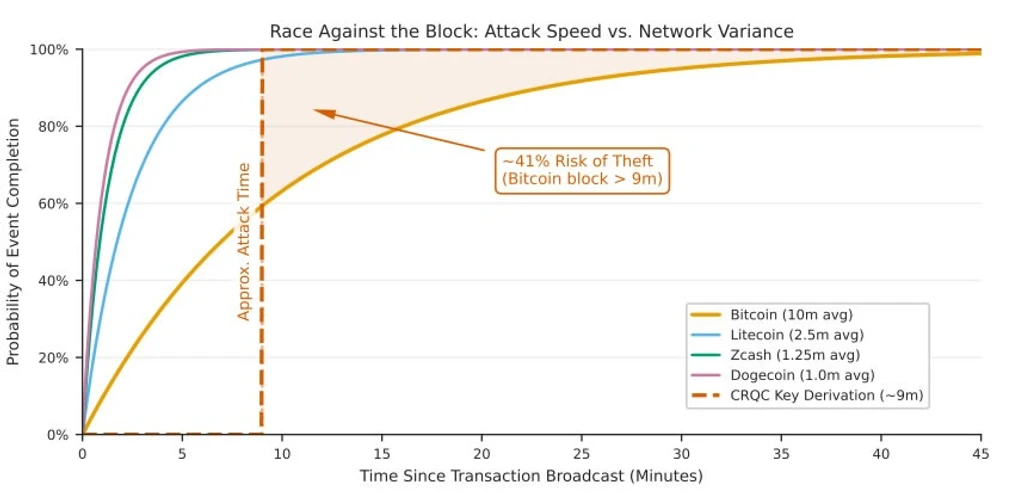
The breakthrough targets the 256-bit elliptic curve discrete logarithm problem used across cryptocurrency networks. In theoretical scenarios, quantum computers could crack Bitcoin private keys in as little as nine minutes, enabling so-called 'on-spend attacks' during Bitcoin's 10-minute block intervals.
Ethereum faces additional risks through 'at-rest attacks' where exposed public keys remain permanently vulnerable. Once an Ethereum account makes its first transaction, the public key becomes permanently visible on the blockchain, creating structural vulnerabilities.
Google estimates the 1,000 wealthiest Ethereum accounts holding approximately 20.5 million ETH could be compromised in fewer than nine days. The company recommends immediate transition to post-quantum cryptography rather than waiting for actual quantum threats to emerge.
Co-author and Ethereum researcher Justin Drake estimates at least a 10% chance that quantum computers could recover private keys from exposed public keys by 2032. Google set a 2029 deadline for post-quantum cryptography migration across its systems.