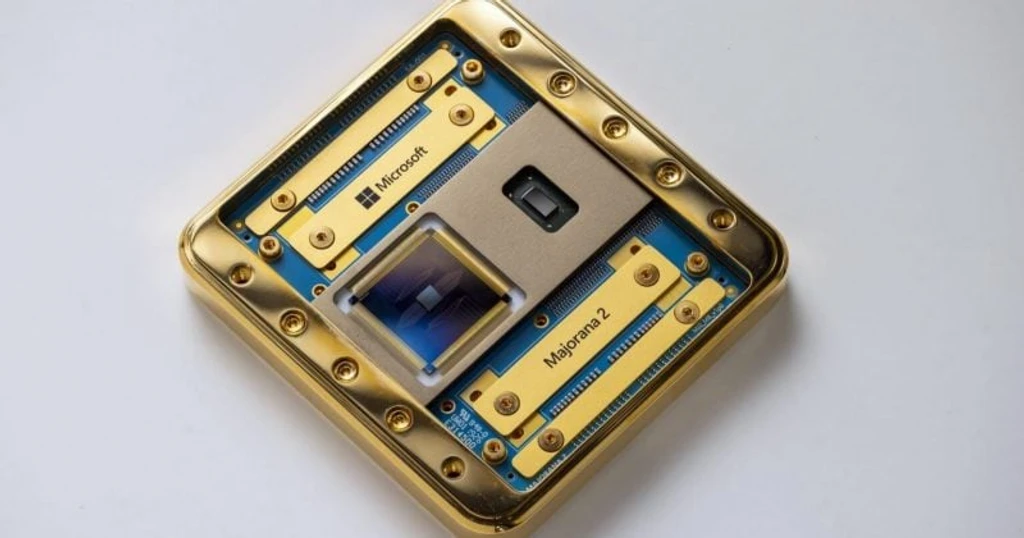
Microsoft's topological qubit hardware can now hold a stable parity state for over 20 seconds-up from less than 10 milliseconds. That's a jump of roughly three orders of magnitude, turning a lab curiosity into something engineers can build on.
The gain came from better materials: lead for superconductors and tin for semiconductors. No new architecture, just painstaking materials science.
Atom Computing tackled error correction using neutral atoms trapped by lasers. By keeping spare, pre-cooled atoms on standby and swapping them in, they sustained logical qubit stability for up to 90 measurement rounds-a meaningful demonstration at operationally relevant timescales.
EeroQ introduced a chip design that uses a resonator to couple individual electrons floating on liquid helium, with the electrons' quantized motional states serving as qubit building blocks.
These updates build on a November 2024 milestone when Microsoft and Atom Computing entangled 24 logical qubits, a record at the time. The question now: can they keep qubits coherent long enough to do useful work?
For the crypto world, the implications are clear. Every major blockchain relies on elliptic curve cryptography, which a powerful quantum computer running Shor's algorithm could theoretically break. NIST is standardizing post-quantum cryptography, but adoption across crypto remains minimal. Investors should evaluate which protocols are taking post-quantum security seriously.