Fresh U.S. and Israeli strikes on Iran have illuminated a significant financial network the regime utilizes: bitcoin mining and a rapidly expanding stablecoin economy. Since legalizing crypto mining in 2019, Iran has leveraged this infrastructure to bypass international sanctions, using mined Bitcoin to pay for imports and settle trade outside the dollar system.
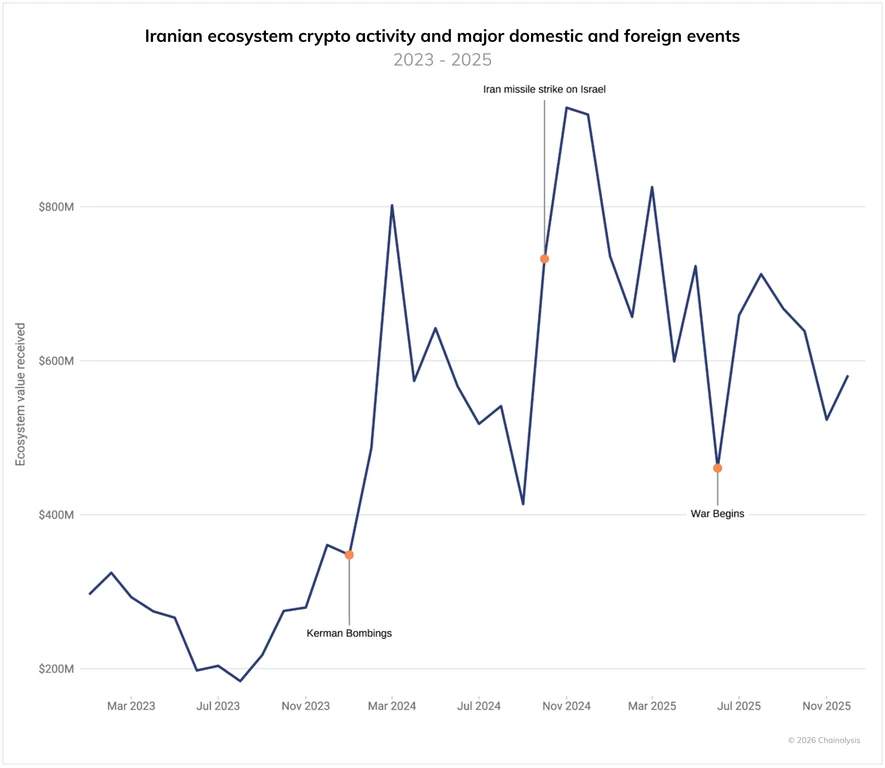
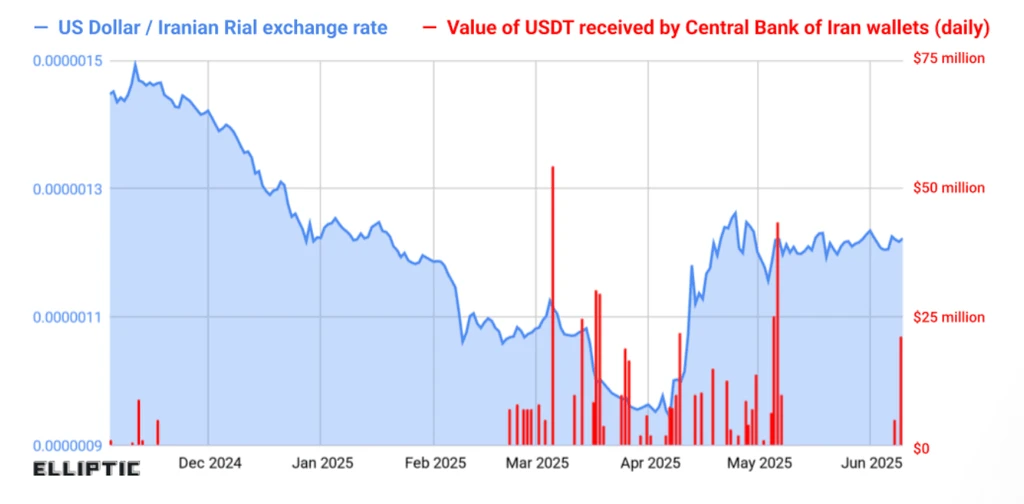
Blockchain analytics firm Chainalysis reported Iran's crypto ecosystem reached $7.78 billion in 2025, with activity often spiking around military clashes and domestic unrest. The Islamic Revolutionary Guard Corps (IRGC) plays a substantial role, with IRGC-linked addresses accounting for over 50% of Iranian crypto inflows in late 2025. Stablecoins, particularly USDT, have also become a key tool for the central bank to finance trade, though the Iranian rial continues to devalue significantly.
Ordinary Iranians have increasingly turned to bitcoin as a financial lifeline during protests and economic crises, evidenced by sharp rises in withdrawals to personal wallets. The IRGC utilizes crypto as another channel to move value, with inflows to IRGC-linked addresses exceeding $3 billion in 2025. Renewed military campaigns introduce fresh risks to this system, potentially impacting mining operations, though the global bitcoin network is expected to adapt.