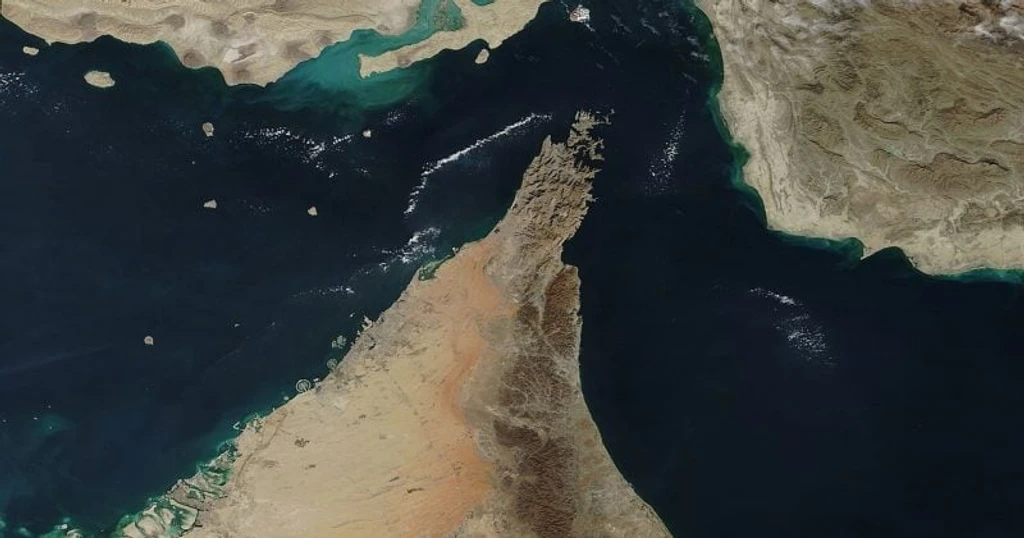
President Donald Trump has transformed the world's most critical oil chokepoint into a toll road. He announced a naval blockade against Iranian ships in the Strait of Hormuz and a 20% toll on all non-Iranian cargo moving through the passage.
Oil prices immediately surged 5-7% in intraday trading.
About 20% of global oil trade flows through this narrow waterway between Iran and the Arabian Peninsula. Trump called the US "THE GUARDIAN OF THE HORMUZ STRAIT" and framed the toll as a matter of "safety and fairness." The toll begins immediately, though no legal justification was provided.
This action directly contradicts longstanding US policy advocating for open, toll-free international waterways.
The move escalates existing military tensions between the US and Iran. International maritime law generally guarantees transit passage through such straits, a principle the US has traditionally respected without formally ratifying the UN Convention on the Law of the Sea. The toll currently exists in a legal gray area, enforced by naval power rather than international consensus.
For markets, the immediate spike in oil prices could influence inflation expectations and future central bank interest rate decisions. Energy-intensive sectors, including Bitcoin mining, face potential margin pressure from sustained higher costs.