
Jito Foundation has signed a memorandum of understanding with Korean digital asset custodian KODA. This partnership aims to explore institutional custody and staking support for JitoSOL within the South Korean market.
The agreement includes reaching out to institutional investors and developing compliant custody and staking pathways. This development aligns with South Korea's Financial Services Commission expected finalization of a digital asset regulatory framework later this year.
Jito Foundation previously announced plans to work with Hanwha Asset Management to explore a JitoSOL exchange-traded fund in South Korea, pending regulatory approval.
According to Marc Liew, head of APAC at Jito Foundation, there is significant interest from large financial firms developing new wealth management products and from institutional entities seeking yield-bearing opportunities for their corporate treasuries through JitoSOL.
KODA offers custody infrastructure, including cold storage, MPC-based key management, and institutional staking, backed by $20 million in digital asset insurance. The company holds a registered VASP license and ISMS certification, with support from KB Kookmin Bank and other investors.
Liew stated that KODA's institutional-grade vaulting system will enable clients to mint JitoSOL directly from their SOL holdings.
Jito is a liquid staking protocol on the Solana network, allowing users to stake SOL in exchange for JitoSOL, a token usable across decentralized finance applications. The Jito Foundation supports development, partnerships, and institutional outreach for the protocol.
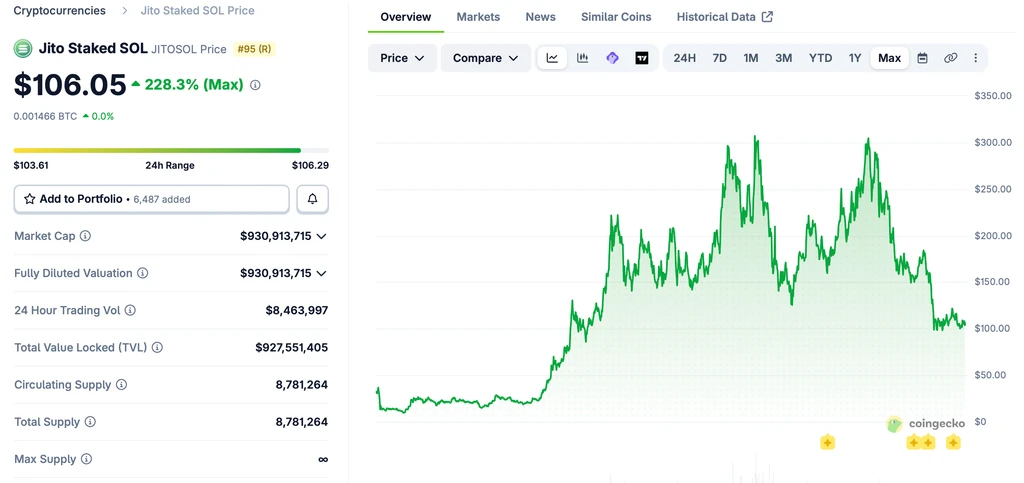
JitoSOL currently has a market capitalization of approximately $930 million. The token already has institutional exposure in Europe via a 21Shares exchange-traded product, and custodians like BitGo and Hex Trust support direct staking from custody accounts.
In parallel, South Korea is intensifying its regulatory approach to the crypto sector. Recent actions include tightening requirements for virtual asset service providers, proposing a 20% ownership cap on domestic exchanges, and introducing stricter reconciliation rules following an exchange payout error. Lawmakers are also drafting legislation to classify stablecoins as foreign exchange payment instruments and require tokenized real-world assets to be trust-backed. The Bank of Korea has called for exchange-level circuit breakers and stronger internal controls, citing a lack of safeguards compared to traditional financial systems.