The United States Senate has voted to prevent the Federal Reserve from issuing a central bank digital currency (CBDC) until December 31, 2030. The amendment, included in the 21st Century Road to Housing Act, passed with broad bipartisan support.
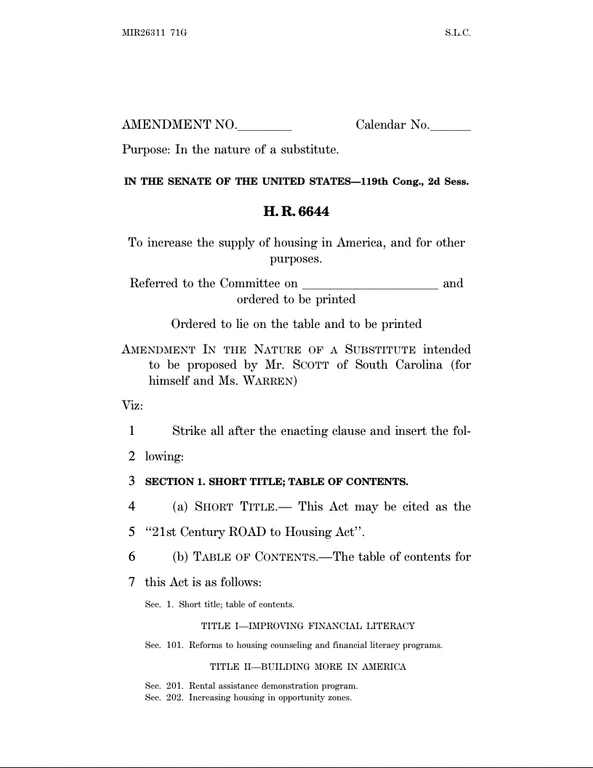
The legislation explicitly prohibits the Board of Governors and Federal Reserve Banks from creating or issuing a CBDC or similar digital asset, directly or indirectly. However, the bill does not restrict dollar-denominated digital currencies that are open, permissionless, and private, such as stablecoins.
US Treasury Secretary Scott Bessent and President Donald Trump have previously advocated for stablecoins as a means to extend US dollar hegemony. Conversely, many lawmakers have expressed strong opposition to CBDCs, viewing them as potential tools for authoritarian surveillance and control over citizens' finances.
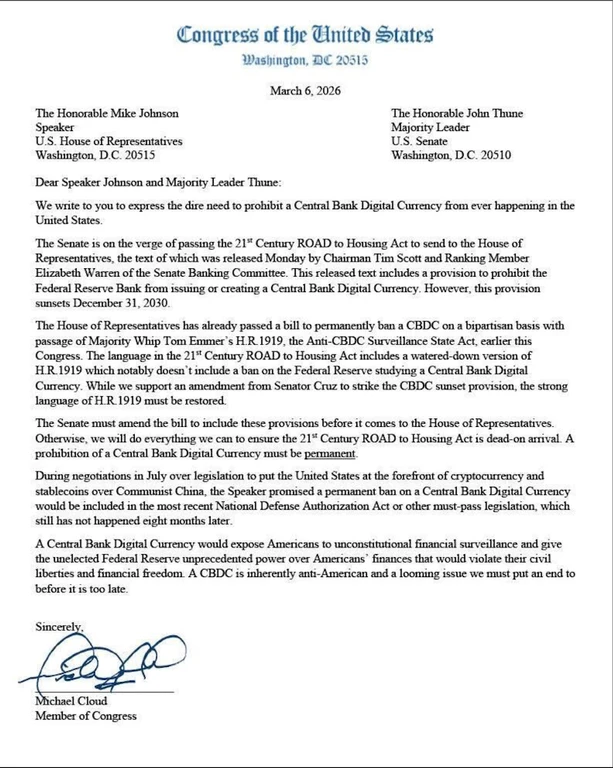
Critics argue that a CBDC could grant unelected officials excessive power over financial freedoms, enabling widespread surveillance and control. Concerns include the potential for automatic taxation or freezing of funds, and the erosion of financial privacy.