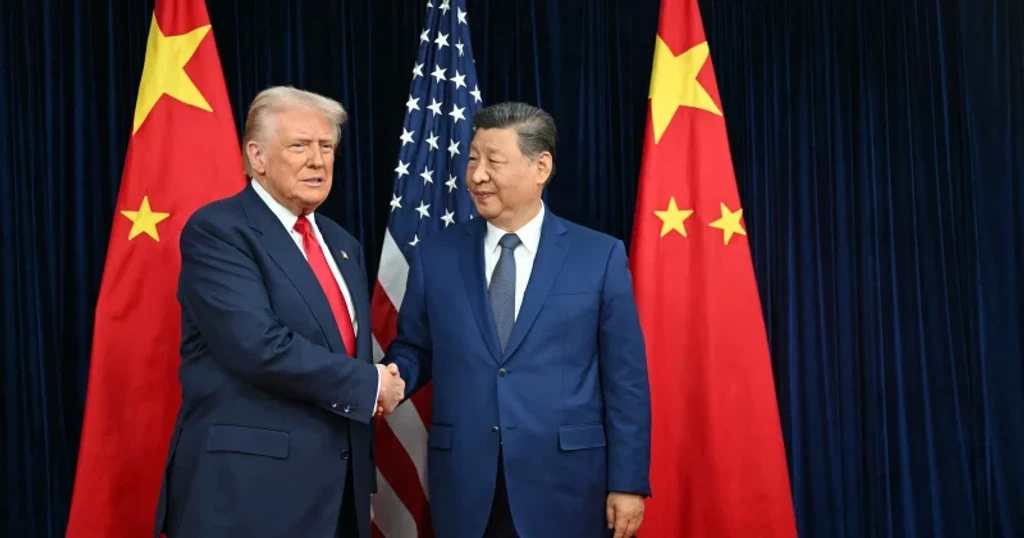
President Donald Trump is set to raise the thorny issue of US arms sales to Taiwan during a meeting with Chinese President Xi Jinping this week. Taiwan is home to TSMC, the semiconductor giant responsible for producing over 90% of the world's advanced chips-the backbone of Bitcoin mining hardware. Any escalation in cross-strait tensions threatens the physical supply chain that keeps proof-of-work blockchains humming.
The meeting arrives as a bipartisan group of US senators pushes approval of a $14 billion weapons package for Taiwan. US arms sales to Taiwan have exceeded $20 billion since 2017, a consistent source of friction between Washington and Beijing. China claims Taiwan as its own territory, viewing each weapons deal as a direct challenge.
Bitcoin mining relies on application-specific integrated circuits, or ASICs, which depend on cutting-edge chip fabrication from TSMC-the only company capable of producing these chips at scale. If disruption occurs, the pipeline of new mining equipment dries up. Bitcoin's market saw a 5% dip in March 2026 after Chinese threats related to Taiwan.
A Taiwanese lawmaker proposed on May 2, 2026, to establish Bitcoin reserves as a hedge against economic isolation during a military threat. Bitcoin offers an alternative store of value independent of the SWIFT network or any central bank.
If the Trump-Xi talks go poorly or the arms package advances without diplomatic counterweight, expect a fear-driven selloff in risk assets. Companies like Bitmain and MicroBT, which depend on TSMC for fabrication, face margin pressure or delivery delays. Investors should watch semiconductor export controls, shipping lane activity in the Taiwan Strait, and changes to TSMC's customer allocation.