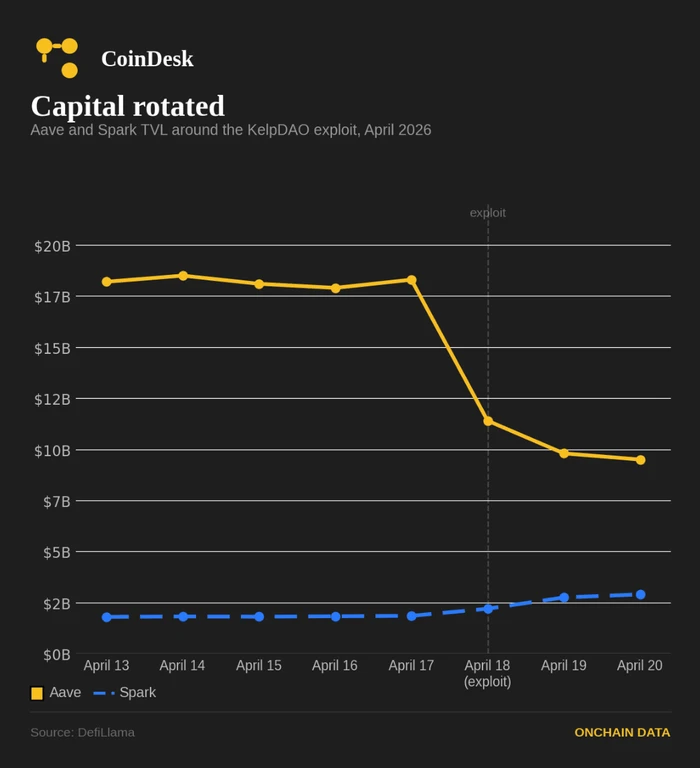
Despite a $292 million exploit and a $13 billion drop in Total Value Locked (TVL), Decentralized Finance (DeFi) demonstrates resilience. The KelpDAO exploit, attributed to North Korea's Lazarus Group, impacted infrastructure rather than a smart contract bug. While capital fled, with Aave seeing significant outflows, the broader DeFi TVL returned to levels seen last year. This event is characterized as a sharp risk repricing, not a catastrophic collapse.
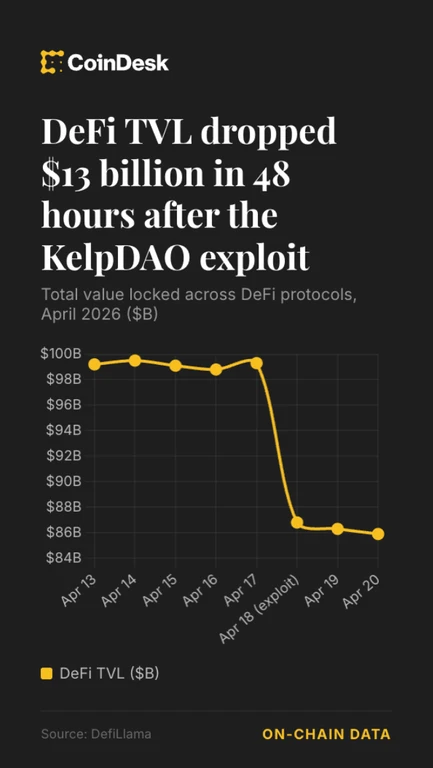
The scale of the TVL drop was amplified by leveraged positions and stacked collateral within protocols like Aave, where recycled assets inflate reported values. The underlying yield environment had already diminished, with DeFi yields falling below traditional savings accounts, pushing users towards leverage to compensate for low organic returns. This concentration made the subsequent unwind particularly sharp.
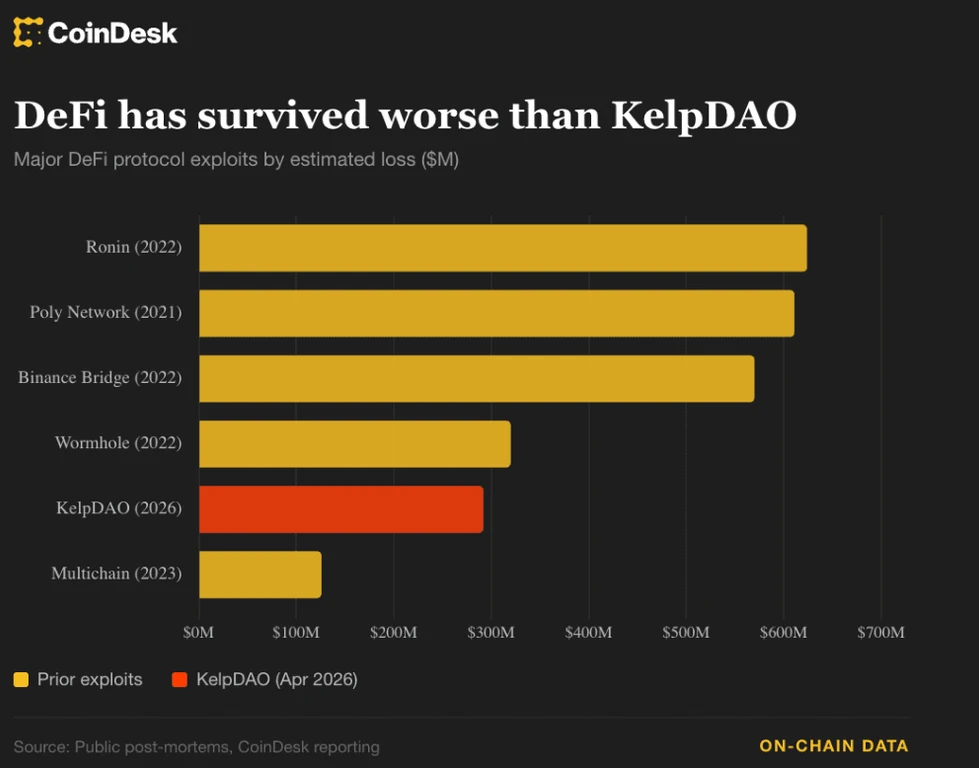
Historically, DeFi has endured significant events, including the collapse of Terra and major hacks on platforms like Wormhole, Ronin, and Multichain, without succumbing. Even a $1.5 billion hack on Bybit last year did not halt its operations. The recent exploit has led to a "repricing of trust," demanding higher risk premiums for on-chain systems.
Instead of a complete exodus, capital is rotating. Protocols like SparkLend saw a TVL increase as they avoided concentrated risks that impacted Aave. The exploit serves as a call to action for builders to develop safer systems and offer more compelling real-world use cases, rather than relying on low single-digit yields for complex, risky products.