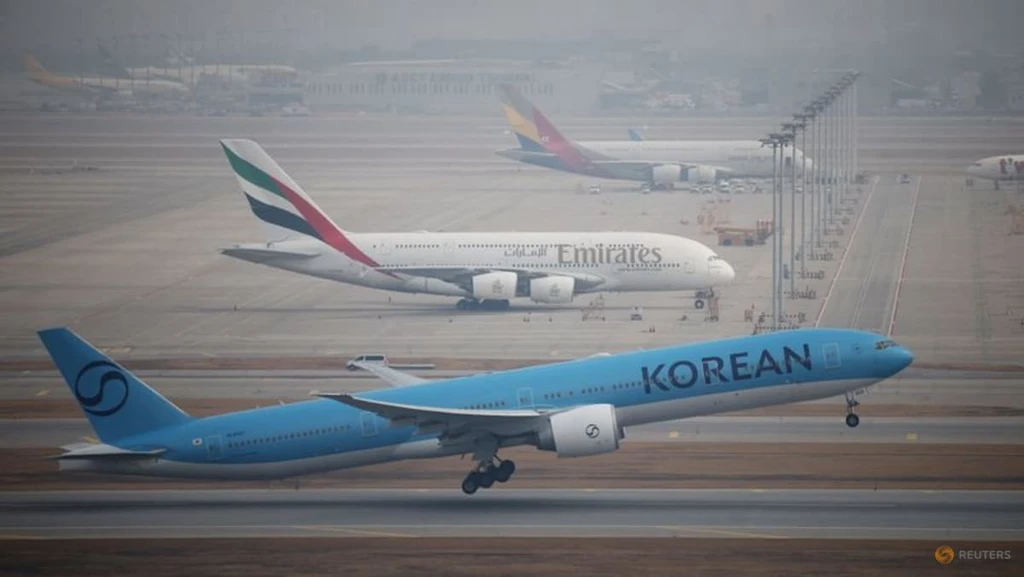
Airline stocks plummeted and airfares surged Monday as the U.S.-Israeli conflict with Iran sent oil prices above $100 a barrel. This escalation fuels fears of a significant travel slowdown and potential aircraft groundings.
Oil prices jumped 15%, with Brent crude futures climbing as much as 29%. Jet fuel costs have doubled since the conflict began, straining carriers already dealing with rerouted flights and stranded passengers. Deutsche analysts warned that airlines globally might be forced to ground thousands of aircraft if relief doesn't materialize, with financially weaker carriers at risk of halting operations.
In Asia, Korean Air Lines, Air New Zealand, and Cathay Pacific saw significant drops. European carriers like Air France KLM, IAG, Wizz Air, and Lufthansa also experienced declines, alongside major U.S. airlines.
Consumer impact is evident, with direct flights from Seoul to London quadrupling in price within a week. Analysts predict that prohibitive costs could curb leisure travel demand throughout 2026, and some companies may restrict business travel.
Fuel represents a major operational expense for airlines. While some Asian and European carriers hedge against oil price volatility, U.S. airlines largely abandoned this practice. The conflict adds significant costs, particularly as jet fuel scarcity exacerbates price hikes. Deutsche analysts recalled the 2005 fuel spike aftermath, which led to bankruptcies for major airlines.
Since the conflict's start, over 37,000 flights to and from the Middle East have been canceled. Airspace constraints have forced airlines to reroute, carry extra fuel, or make additional stops. Major carriers like Emirates, Qatar Airways, and Etihad face disruptions impacting key routes. Muscat International Airport in Oman is prioritizing government and commercial flights, restricting private jet operations due to airspace closures.