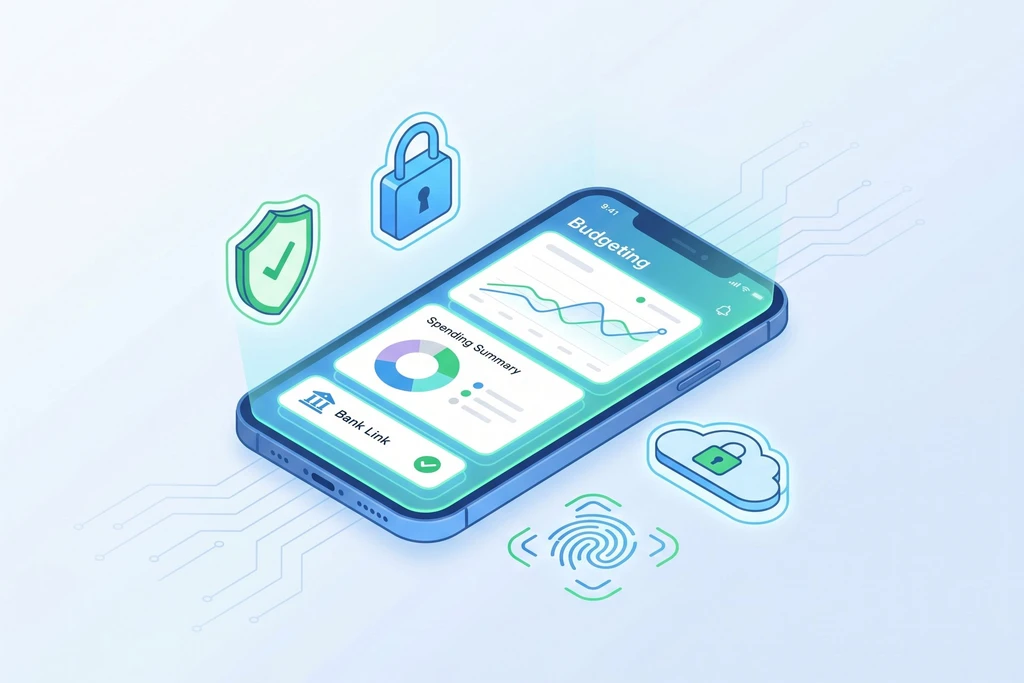
Budgeting apps require linking financial accounts to track spending, raising legitimate security concerns. The good news: established apps use robust protections, including bank-level encryption, multi-factor authentication, and read-only access.
Apps typically connect through third-party aggregators like Plaid, which act as a secure bridge. The aggregator verifies login credentials without sharing them with the app. The app receives transaction data but cannot initiate payments or transfers.
"This model has been stress-tested over millions of users and has held up reasonably well," says financial advisor Scott Jones. "When families ask if linking accounts is safe, my honest answer is yes, generally, when you stick with established names."
Security layers include: encryption converting data into unreadable code; read-only access preventing money movement; multi-factor authentication requiring verification beyond passwords; third-party security providers following strict encryption guidelines.
Risks to watch for: data breaches targeting apps or aggregators; phishing attempts via fake emails or login pages; copycat fake apps; weak or reused passwords; over-permissioned apps accessing more data than necessary.
"Credential reuse-meaning the password on your budgeting app is the same one protecting your bank login-is what actually causes losses," warns Jones.
Safe usage tips: use strong unique passwords; enable multi-factor authentication; stick with reputable apps; avoid public Wi-Fi when logging in; review permissions regularly; keep apps updated; review privacy policies to confirm data isn't sold or shared.