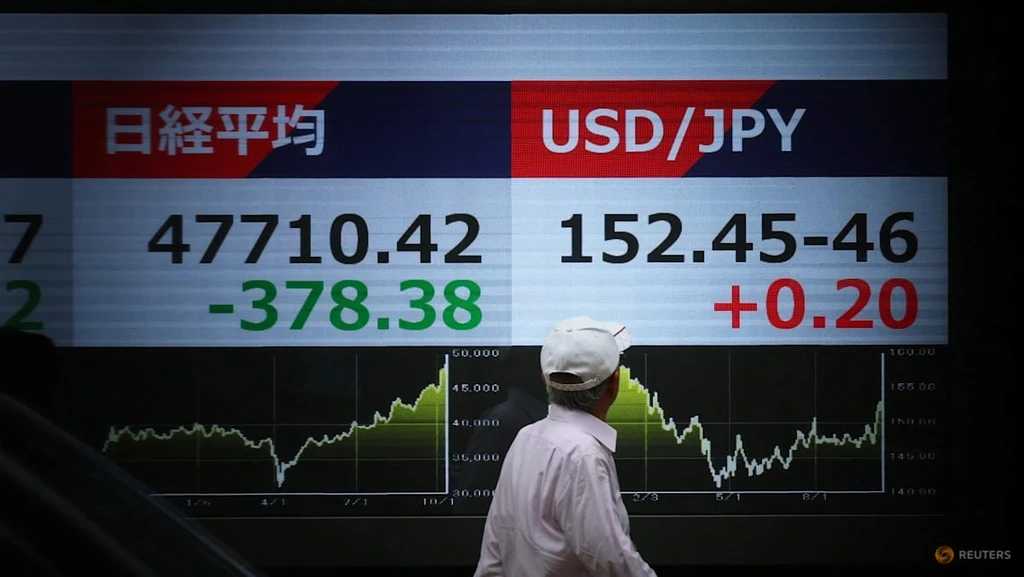
Asian equities fell Wednesday as escalating tensions in the Middle East unsettled global markets. The MSCI Asia-Pacific index dropped 0.6%, with Japan’s Nikkei down 0.9% and South Korea’s KOSPI slumping 2%.
Oil prices climbed approximately 1%, with Brent crude rising to $92.29 a barrel following US strikes on Iran. President Donald Trump confirmed Tehran shot down a US Apache helicopter in the Strait of Hormuz, raising fears of sustained supply disruptions.
Investor focus now shifts to US inflation data due Wednesday. Economists predict Consumer Price Index (CPI) rose 4.2% year-over-year in May, the largest annual increase since April 2023. A stronger-than-expected jobs report has led traders to fully price in a Federal Reserve rate hike this December, reversing prior expectations for cuts.
Charu Chanana, chief investment strategist at Saxo Bank, noted that while geopolitics is currently viewed as headline risk rather than a macro shock, energy infrastructure escalation could trigger significant repricing.
Emerging markets are reacting swiftly. Bank Indonesia raised interest rates in a surprise off-cycle meeting to stabilize the rupiah, joining growing calls for the Bank of Japan to accelerate its own rate hikes amid persistent yen weakness.
Anthony Saglimbene of Ameriprise warned that the market has less room for comfort when oil prices, inflation, and Fed policy all converge against equities. This confluence of risks is reshaping the outlook for both developed and emerging asset classes.