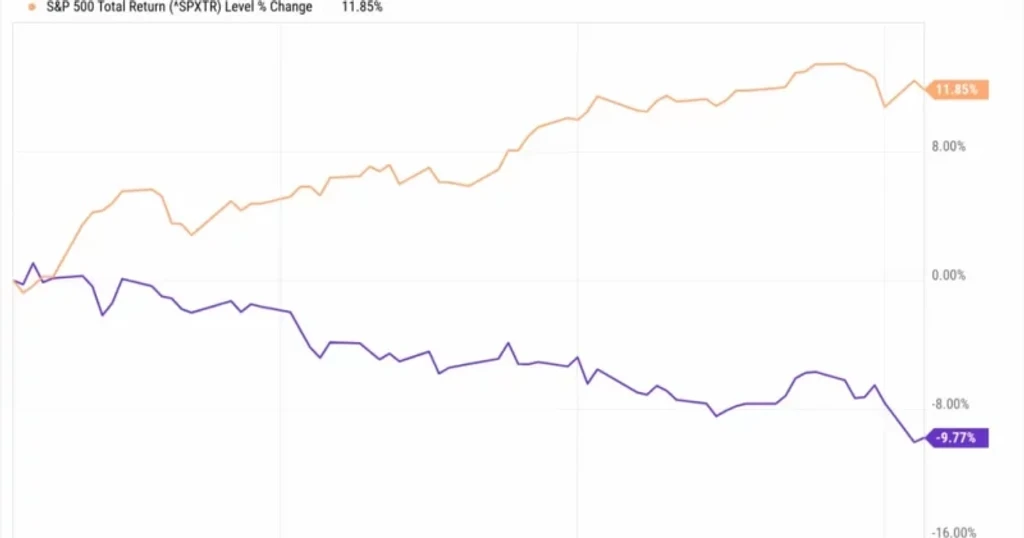
For nearly six decades, Berkshire Hathaway nearly doubled the S&P 500's returns. But since Warren Buffett announced his retirement in May 2025, the script has flipped.
As of mid-May 2026, Berkshire shares have lagged the S&P 500 by 30 to 41 percentage points. The S&P 500 gained 25% to 31% over that period, while Berkshire was flat or down.
The Buffett vacuum and $397 billion on the sidelines
Greg Abel took over as CEO on January 1, 2026. He inherited not just the corner office, but a widening performance gap-and a record $397 billion cash pile. Buffett spent his final years pulling back from the market, and Abel has continued that conservative posture.
Why some see crisis signals
The late 1990s dot-com bubble is a cautionary tale. Berkshire underperformed then as tech soared, only to look prescient when the bubble burst.
Still, Berkshire’s underperformance may simply reflect the market repricing a company navigating a once-in-a-generation leadership transition. Buffett wasn't just a CEO-he was the investment thesis.
What this means for investors
Berkshire holds nearly $397 billion in dry powder, with no operational crisis. Analysts say this isn't a systemic crisis, but a potential opportunity for value investors.
The bearish case: Buffett’s departure removes why many owned Berkshire. Abel is capable, but hasn't proven he can deploy that cash into outsized returns. Leadership transitions at founder-driven firms are inherently risky, and the market is pricing that uncertainty in.