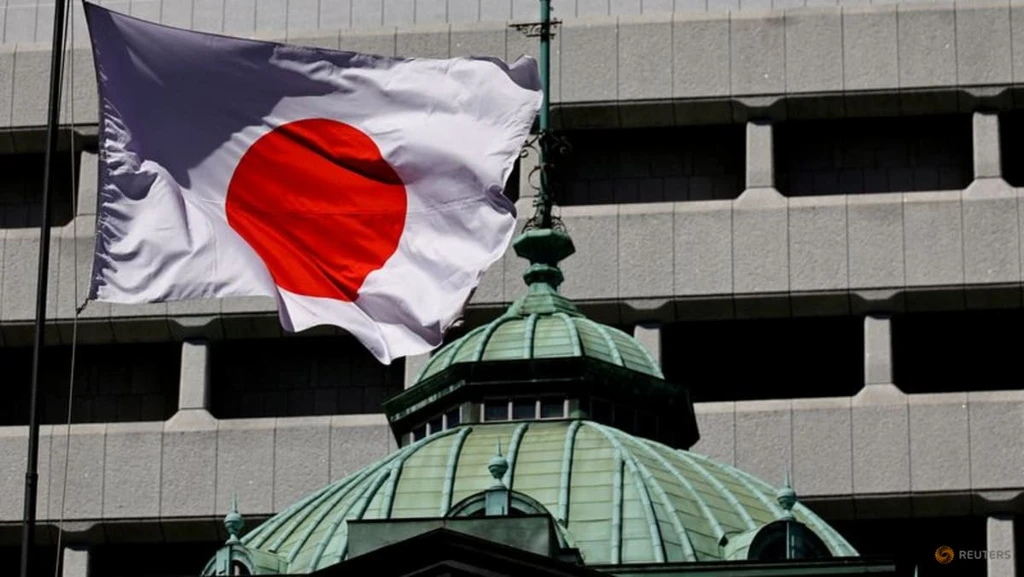
The Bank of Japan has strongly indicated a rate hike is likely in June, driven by growing concerns over inflation potentially exceeding its target. Officials are talking up the risks of an "inflation overshoot," a strategy that hinges on the assumption that global geopolitical events, particularly in the Middle East, will not significantly worsen the economic outlook.
Analysts interpret the BOJ's unusually direct communication as a sign of its worry that energy shocks could trigger secondary inflationary effects, potentially putting the central bank behind the curve. Tetsuya Inoue, executive economist at Sony Financial Group, noted the BOJ's focus on upside inflation risks, stating they are prepared to raise rates even if economic growth undershoots expectations.
The BOJ kept its key interest rate steady at 0.75% but signaled that the June 15-16 meeting will be a critical juncture. This was underscored by three dissenters on the nine-member board who proposed an immediate hike to 1.0%.
The central bank's quarterly report stated that inflation risks outweigh growth risks, necessitating extra vigilance against a sharp overshoot. Policy guidance was also adjusted to clarify that rate hikes are possible to combat inflation, provided Japan avoids a severe economic downturn.
Governor Kazuo Ueda stated that the BOJ needs "a bit more data" before acting, but aims to ensure it is not behind the curve on inflation in its June decision. Former BOJ official Nobuyasu Atago believes the bank is actively building a case for a June hike, expressing serious concern about falling behind.
A June hike could be strategically convenient for some hawkish board members. Junko Nakagawa, one of the dissenters, faces the end of her term in June, her last opportunity to vote for a rate increase. Her potential successor, Ayano Sato, is viewed by markets as less hawkish.
However, meeting the conditions for a June hike is not guaranteed. The BOJ's projections assume a stable Middle East conflict and falling oil prices, conditions currently under threat. Oil prices have risen, and disruptions in the Strait of Hormuz could exacerbate supply chain issues, potentially impacting factory activity and the broader economy.
"With the Strait of Hormuz remaining closed and concerns over oil supply persisting, downside risks cannot be ignored, making a June hike difficult in practice," said Takeshi Minami, chief economist at Norinchukin Research Institute.
Political considerations also play a role. The government, focused on growth, may oppose an early rate hike if economic strain increases. Any move by the BOJ to both raise rates and taper its bond purchase plan requires careful communication to avoid market volatility.
Mari Iwashita, executive rates strategist at Nomura Securities, noted Ueda's hawkish tone, suggesting a June hike is envisioned, but questioned its practical feasibility.