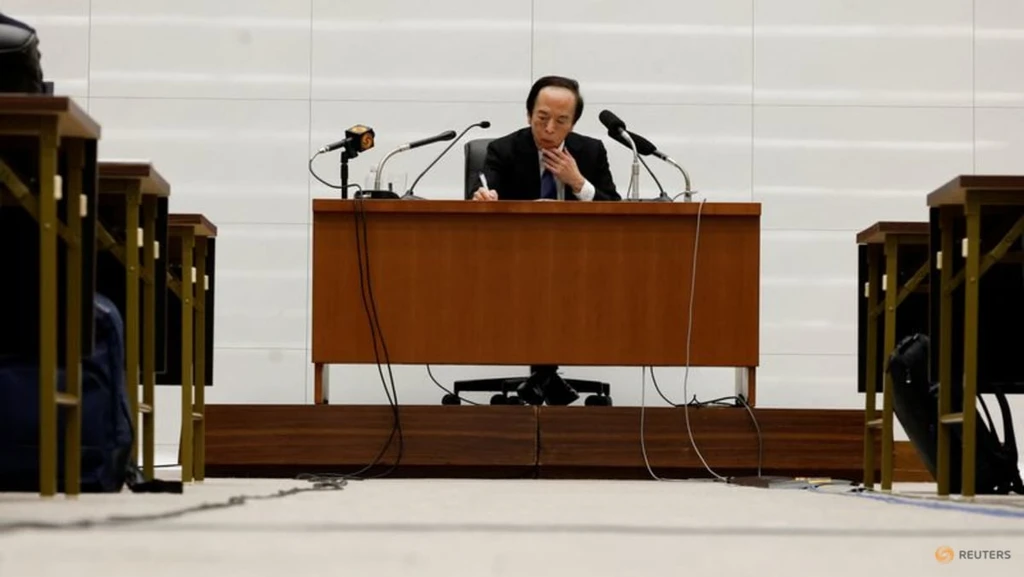
The Bank of Japan maintained its current interest rates on Tuesday, but three of its nine board members proposed an increase. This signals policymakers' growing concern over inflationary pressures, particularly those exacerbated by the Middle East conflict.
The central bank significantly revised its price forecasts upward and emphasized vigilance against the risk of inflation exceeding targets, strongly suggesting a rate hike could occur in the coming months.
BOJ Governor Kazuo Ueda stated that the duration and impact of the Middle East conflict on the economy and prices remain uncertain. He indicated the bank requires more time to scrutinize these effects and assess potential shifts in growth and inflation risks. Ueda noted that underlying inflation is nearing 2 percent, and companies may pass on rising oil-related costs. The bank stressed the need to carefully monitor data to avoid falling behind the curve.
Regarding the conditions for another rate hike, Ueda stated there is no predetermined timeline for assessing when those conditions might be met. He explained that the upward revision in price forecasts reflects the potential for rising crude oil prices to temporarily inflate a wide range of goods and services. However, underlying inflation remains slightly below 2 percent and is expected to gradually accelerate.
Ueda clarified that Tuesday's decision was based on looking through temporary supply shock-driven inflation. Nevertheless, if such shocks lead to second-round effects on underlying inflation, an interest rate hike would be necessary. While headline inflation may rise sharply temporarily, underlying inflation is not expected to immediately heighten. However, with companies showing increased willingness to raise wages and prices, policy must be guided to foster a clear rise in medium- and long-term inflation expectations, potentially leading to an overshoot.