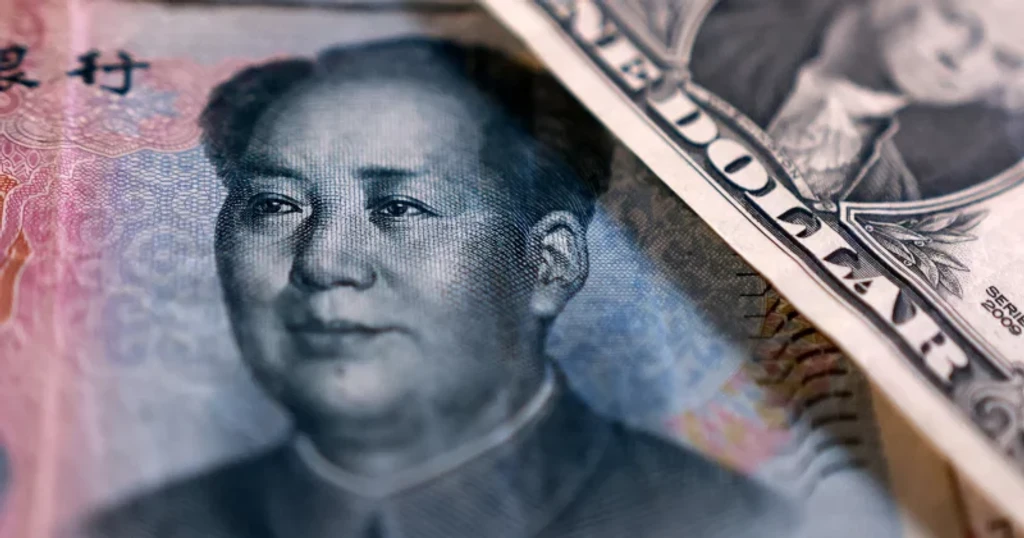
At least five major Chinese commercial banks are quietly raising their US dollar deposit rates to levels at or above the Secured Overnight Financing Rate (SOFR), currently around 3.61%.
The goal: encourage corporate clients to hold dollars instead of converting to yuan. Since January 2026, the yuan has strengthened roughly 3% against the dollar, putting pressure on China's export sector.
This reverses a 2023 policy, when banks cut dollar deposit rates to stem capital outflows amid a weakening yuan. Now, by offering competitive returns on dollar deposits, banks aim to soak up greenbacks that would otherwise boost the yuan.
The People's Bank of China made no formal announcement, signaling a quiet regulatory maneuver.
China operates a managed exchange rate. The PBOC sets a daily reference rate, allowing the yuan to trade within a band. Raising dollar deposit rates through commercial banks is a subtle tool that avoids direct FX intervention.
For investors, this could tighten dollar liquidity within China's banking system, as fewer dollars circulate. Chinese banks are now effectively competing with US money market rates to attract dollar holdings.