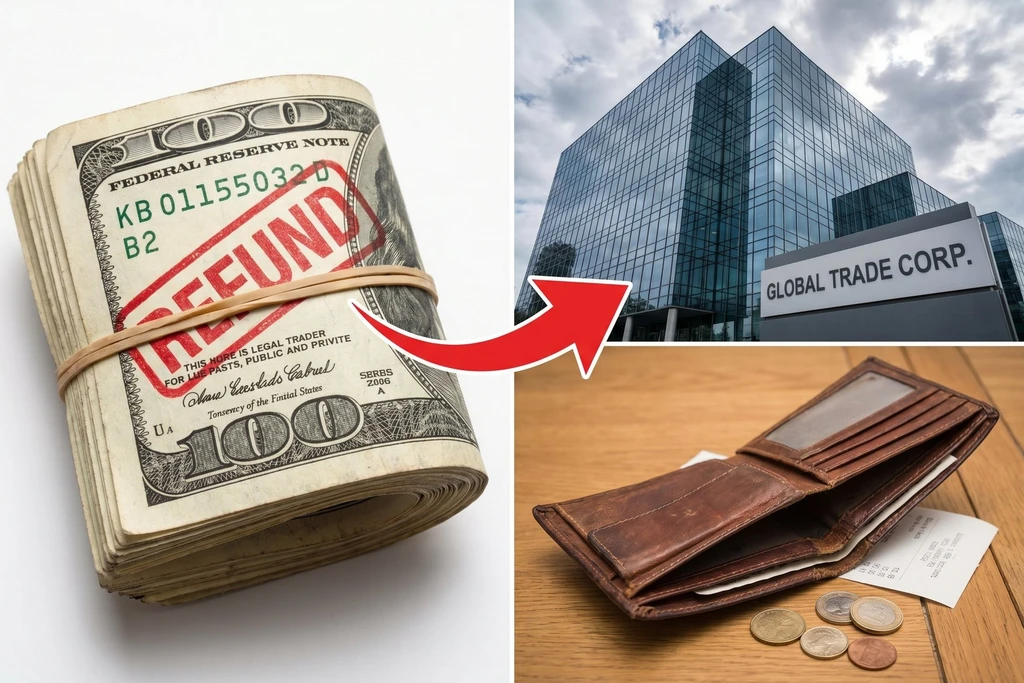
Corporate America is poised to recover billions in tariff refunds after the U.S. Supreme Court struck down levies imposed under the International Emergency Economic Powers Act (IEEPA). U.S. Customs and Border Protection has begun processing claims for an estimated $166 billion in potentially refundable duties.
A review of Securities and Exchange Commission filings reveals that at least 90 publicly traded companies are seeking reimbursements. Major automakers are leading the charge: Ford seeks $1.3 billion, while General Motors and UPS each target $500 million.
Despite the windfall, direct consumer benefits remain scarce. Most corporations plan to use the funds for debt reduction, supply chain optimization, or reinvestment. UPS stands as a notable exception, committing to disburse refunds to customers within 60 to 90 days of receipt. FedEx has similarly pledged to return applicable duties and interest.
Walmart and The Home Depot indicate they will use refunds to offset costs and stabilize prices, though Walmart’s CFO noted the amount represents less than 0.5% of U.S. annual sales. Legal experts warn that everyday consumers lack contractual rights to these funds, limiting their ability to claim a share directly.
Some firms are liquidating their claims for immediate liquidity. Children’s Place sold $38.2 million in refund rights for $25.7 million, while GoPro and Accuray executed similar deals. Meanwhile, the Justice Department is appealing the court order mandating reimbursements, creating uncertainty for smaller businesses lacking the resources for prolonged legal battles.
The refund process continues despite political pressure. Former President Donald Trump previously suggested that companies refusing refunds would earn his favor, yet major entities including Apple continue to pursue their legally entitled recoveries.