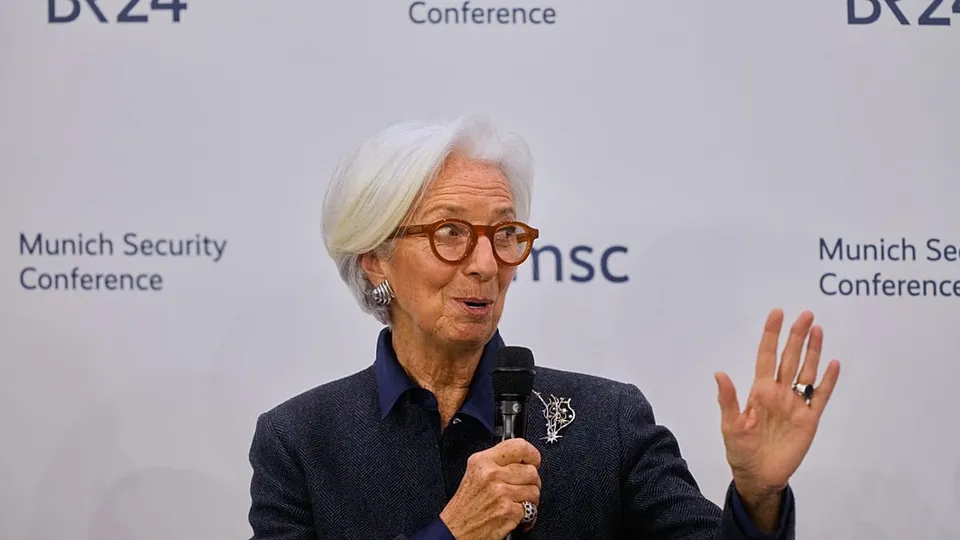
Speculation surrounding a potential early departure for ECB President Christine Lagarde has ignited debate over the influence of France's far-right on the central bank's leadership. Economists largely dismiss the notion that a future far-right government in France could dictate ECB appointments. However, they warn that political maneuvering around succession could undermine the institution's independence and credibility.
Reports suggested Lagarde might step down before her mandate ends in 2027, a move perceived by some as a bid to secure a successor before potential French elections. Economists like Andrew Kenningham of Capital Economics state that while such timing may not affect monetary policy, it presents a "bad look" for politicians attempting to influence key appointments. He emphasized that the ECB's broader decision-making structure, involving the European Council and qualified majority voting among 27 member states, acts as a significant safeguard against unilateral control by any single nation.
Frederik Ducrozet of Pictet Wealth Management echoed this sentiment, calling it "unrealistic" to believe France could unilaterally appoint an "extremist unorthodox central banker." He stressed that any succession would involve compromise with countries like Germany. The National Rally (RN) party, meanwhile, has criticized President Emmanuel Macron, accusing him of political maneuvering and weakening France's credibility.
The debate surfaces as France's central bank governor also announced an early resignation, further fueling political commentary on appointments.