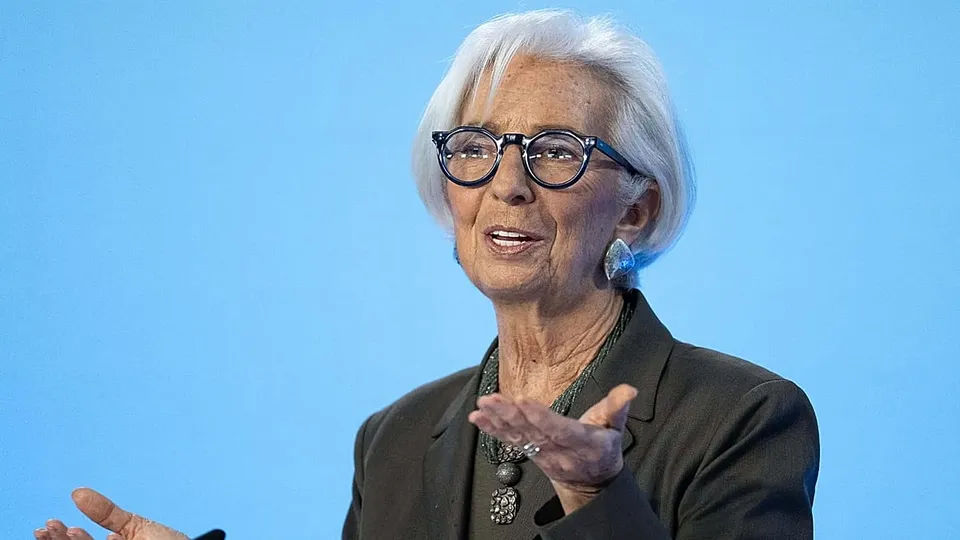
Speculation is rampant regarding the European Central Bank's future leadership, with indications that President Christine Lagarde may consider an early exit. This potential departure is reportedly to ensure a successor is in place before France's upcoming elections, where the far-right is gaining traction.
While an ECB spokesperson stated no decision has been made and Lagarde remains focused on her duties, the official response has been notably less definitive than in the past. Lagarde herself commented that finishing her mandate is her "baseline" but did not completely dismiss reports of an earlier departure. She also acknowledged interest in a potential future role as chairman of the World Economic Forum.
Despite official denials, the succession rumors have already prompted reactions from EU nations. Spain's Economy Minister has declared the country's desire for a "leadership role within Europe’s main economic institutions." A strong contender from Spain is Pablo Hernández de Cos, former Governor of the Bank of Spain and current head of the Bank for International Settlements.
The race for the ECB's top position is highly competitive. Candidates must secure backing from at least 16 of the 21 eurozone countries, representing 65% of the bloc's population. Klaas Knot, former Dutch central bank chief, is also a widely considered successor. Lagarde herself previously endorsed Knot, highlighting his ability to foster inclusivity.
Analysts suggest that an earlier succession would favor Knot, as de Cos was recently appointed to lead the Bank for International Settlements. Should Lagarde depart early, French President Emmanuel Macron and German Chancellor Friedrich Merz would likely play pivotal roles. Given Lagarde is French, it is unlikely her successor will be, with France potentially focusing on the ECB chief economist position.
Germany's Joachim Nagel, head of the German central bank, is another potential candidate, though Germany has never held the top ECB post. However, with the current European Commission President, Ursula von der Leyen, being German, this could complicate Germany's bid.
Italy, Europe's third-largest economy, is also a key player. Fabio Panetta, Governor of the Bank of Italy and former ECB Executive Board member, is a prominent figure. Mario Draghi, former ECB President, continues to hold significant influence and has voiced concerns about Europe's "existential risk."
The ECB succession race unfolds against a backdrop of polarized EU policy debates, including the harmonization of financial rules and the contentious issue of Eurobonds. Any candidate will face scrutiny on their stance regarding debt mutualization and managing a potentially fragmented monetary union.