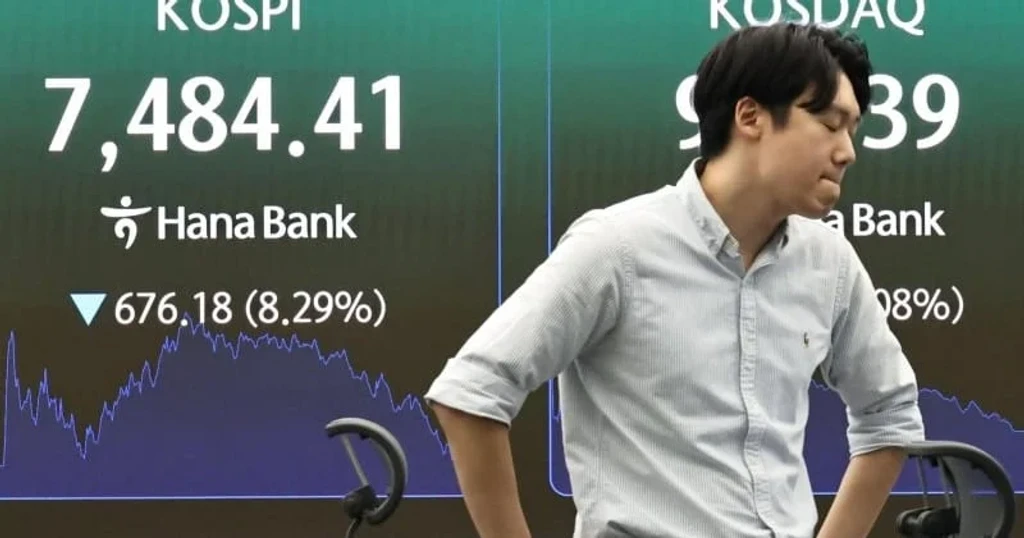
Foreign investors have sold approximately $62 billion worth of South Korean stocks by late May 2026, even as the KOSPI benchmark index posted a year-to-date gain of over 70%. The selling pressure culminated in a dramatic intraday drop of more than 8%, with June 5 earning the nickname "Black Friday" after the index shed over 5% in a single session. On that day alone, foreign outflows hit roughly 1.24 trillion won, or about $801 million.
The KOSPI surged past multiple record highs, approaching or exceeding the 8,000 level. A 70%-plus gain in under six months puts South Korea’s benchmark among the best-performing major equity indices in the world this year.
The selling has been concentrated in South Korea’s semiconductor giants: Samsung Electronics and SK Hynix. The Korean won weakened to its lowest level against the US dollar in over 17 years during the outflow period, adding currency translation losses for foreign holders.
The outflows appear driven largely by mechanical factors-rising index weightings in global benchmarks like the MSCI Emerging Markets Index force index-tracking funds to rebalance, and profit-taking tied to major upcoming US IPOs like SpaceX draws capital back toward American markets.
Domestic retail investors have poured an estimated $70 billion into Korean equities, more than offsetting the $62 billion in foreign outflows. This local buying power has kept the KOSPI’s upward trajectory intact despite the relentless foreign selling.