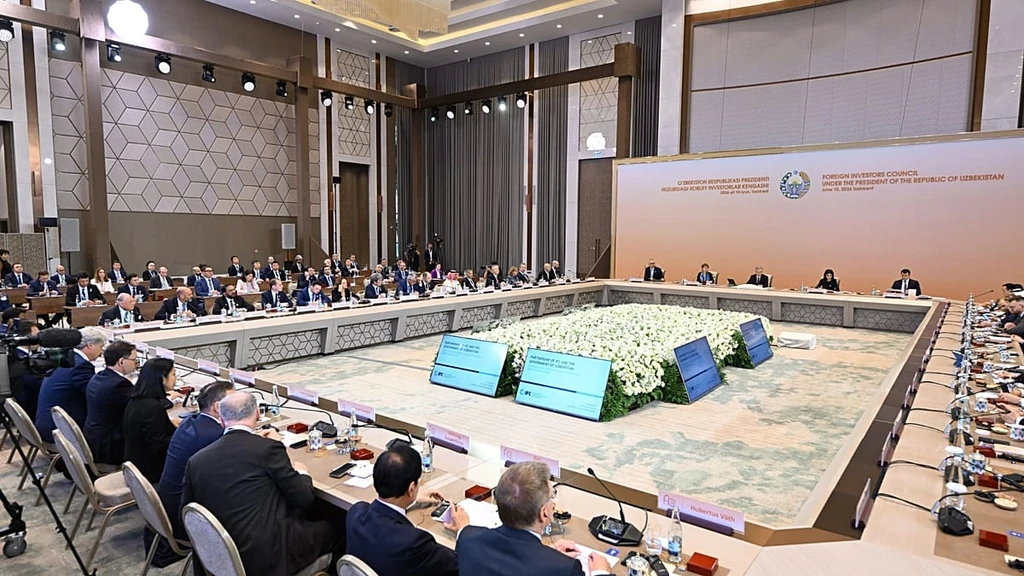
Uzbekistan is converting 120 recommendations from foreign investors into a formal economic reform roadmap. Following the Tashkent International Investment Forum, President Shavkat Mirziyoyev confirmed these proposals will directly shape government policy across banking, energy, artificial intelligence, and corporate governance. Officials will monitor implementation and report progress directly to the presidency.
The Foreign Investors Council has expanded to 85 member companies representing 23 sectors. Key initiatives include establishing the Tashkent International Financial Centre and adopting OECD investment standards. President Mirziyoyev stated that investor feedback has already driven changes in tax legislation and financial reporting requirements for international firms.
Development banks are deepening their commitment to this transition. The European Bank for Reconstruction and Development reviewed a partnership portfolio exceeding $7 billion, making Uzbekistan its largest Central Asian partner. New agreements cover sustainable transport, railway digitalization, and startup ecosystems. Simultaneously, the New Development Bank discussed cooperation in energy, water management, and regional transport corridors.
Despite progress, legal certainty remains a primary concern. EU Special Representative Eduards Stiprais highlighted that regulatory predictability and independent courts are essential for sustained investment. London Stock Exchange CEO Julia Hoggett reinforced this, noting that capital market development hinges on investors' confidence in economic stability and legal protections.
Strategic focus is also shifting toward the digital economy. Experts emphasize that data must be treated as a strategic national asset to support AI infrastructure. This forum signals a structural shift where international capital is actively shaping the legislative framework required for long-term growth in Central Asia.