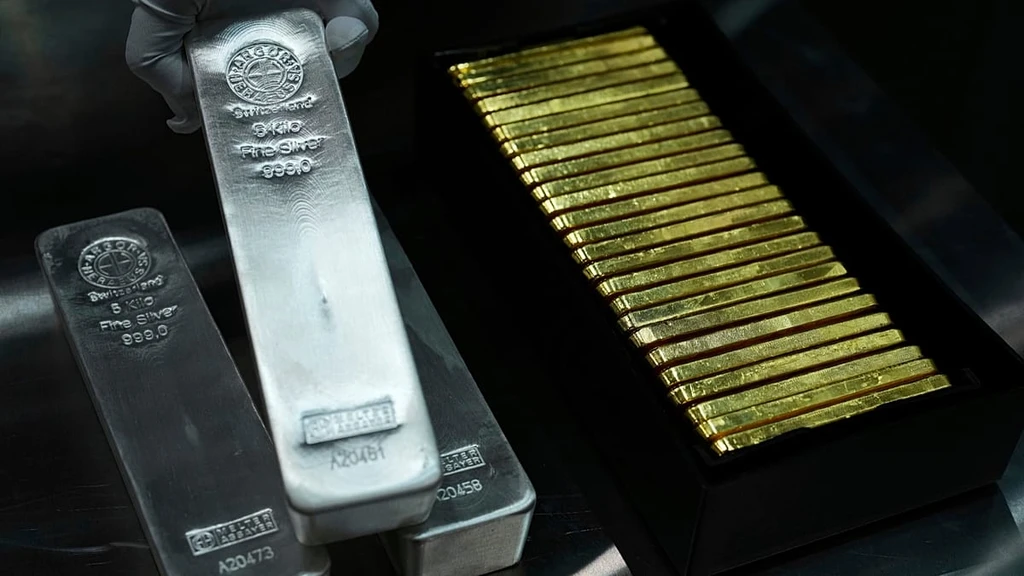
Gold plunged to a 2026 low near $4,100 an ounce before rebounding above $4,400 after former President Donald Trump announced a five-day delay in military strikes on Iran following productive talks with Tehran. The swing erased earlier crisis-driven gains.
Silver tumbled 8.9% to $61.76, down nearly 50% from its January peak of $121.67 - one of the most violent collapses in the metal's modern history.
The dollar strengthened to $1.1572 against the euro and $1.3341 versus the pound, emerging as a primary safe-haven asset amid rising oil prices and bond yield increases.
Crude oil has surged past $100 a barrel, fueling inflation fears and expectations of higher interest rates. These conditions undermine non-yielding assets like gold and silver, which become costlier to hold.
US Treasury yields climbed as investors shifted into government bonds, further pressuring precious metals.
Russ Mould, investment director at AJ Bell, cautioned against writing off gold, noting this is only the third major bull run since 1971. Both prior cycles featured severe volatility yet delivered substantial long-term gains.
The 1971-1980 rally saw gold climb from $35 to $835 despite three bear markets. The 2001-2011 advance included multiple double-digit corrections before peaking near $1,900.
Current macroeconomic stress - driven by war, inflation, and fiscal strain - could reignite demand for gold if central banks respond with rate cuts or quantitative easing.
"It may be too early to give up on gold just yet," Mould said.