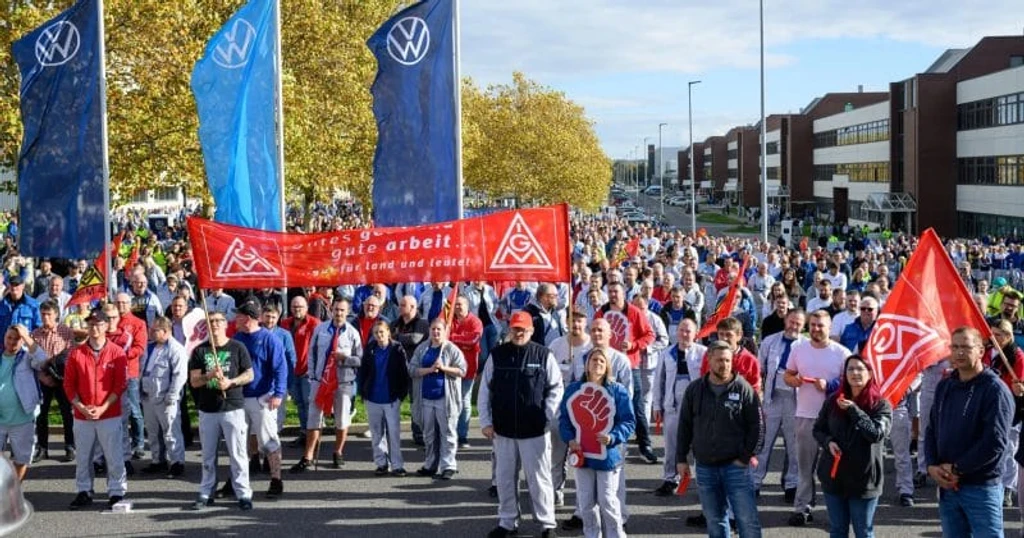
Germany's automotive industry is undergoing a historic restructuring. Volkswagen is planning to cut up to 100,000 jobs, roughly 15% of its global workforce.
The cuts are a direct response to intense competition from Chinese electric vehicle manufacturers. Companies like BYD have undercut European rivals on price while matching or exceeding them on technology.
German automakers have watched their market share slide to levels not seen in 13 years. The industry invested billions in an EV transition but misjudged the pace of adoption in Europe and underestimated Chinese scaling globally.
Four major German production plants are reportedly on the chopping block. Audi plans to eliminate 7,500 jobs by 2029. The industry's trade association, VDA, has revised its total job loss projections upward by 35,000 for the coming decade.
The restructuring is causing significant political and social fallout. Powerful unions are pushing back, and towns where plants are the largest employers face severe economic consequences.
For investors, the outlook suggests continued short-term stock volatility and restructuring charges for Volkswagen and its peers. The upward revision of job loss estimates indicates the industry has not yet found a floor.
European parts suppliers, heavily dependent on these automakers, face their own reckoning as the effects ripple through the supply chain.