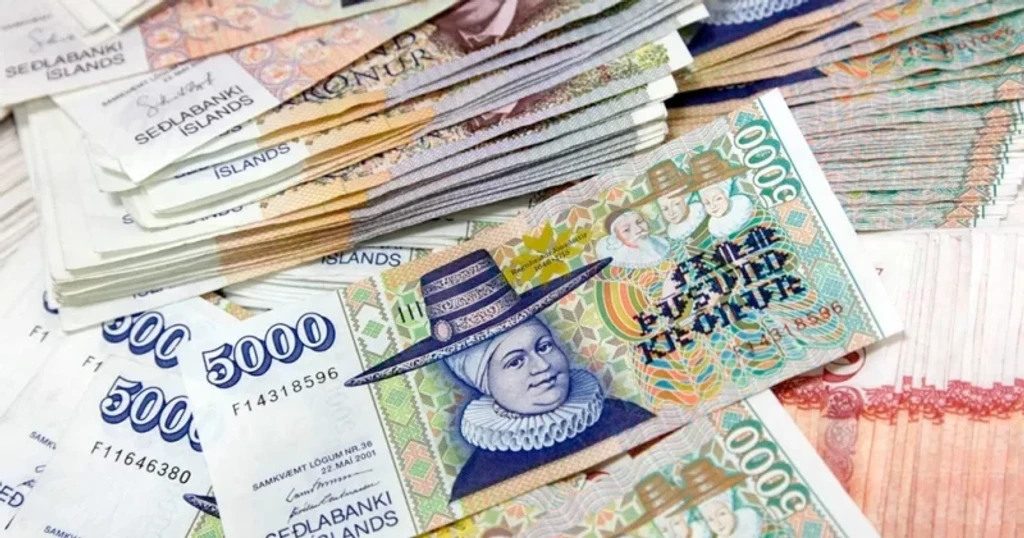
Iceland’s Finance Ministry has concluded that maintaining the króna as the nation’s currency costs more than it’s worth. A government-commissioned expert report ties the króna to high inflation, elevated interest rates, and cyclical economic instability. Iceland currently carries the highest borrowing costs in western Europe.
The 2008 financial crisis remains a vivid illustration. When three largest banks collapsed, the króna’s rapid depreciation turned a banking disaster into an inflation crisis.
The report outlines benefits of adopting the euro: lower interest rates, reduced transaction costs for businesses trading with Europe, greater stability, and deeper integration with the European economy. However, it stops short of recommending any specific action, offering no timeline for EU membership or formal currency peg.
For investors, lower borrowing costs would make Icelandic government bonds less attractive from a yield perspective but more attractive from a risk perspective. Foreign direct investment could increase as currency risk disappears. The real estate market, shaped by high mortgage rates, could see meaningful repricing.