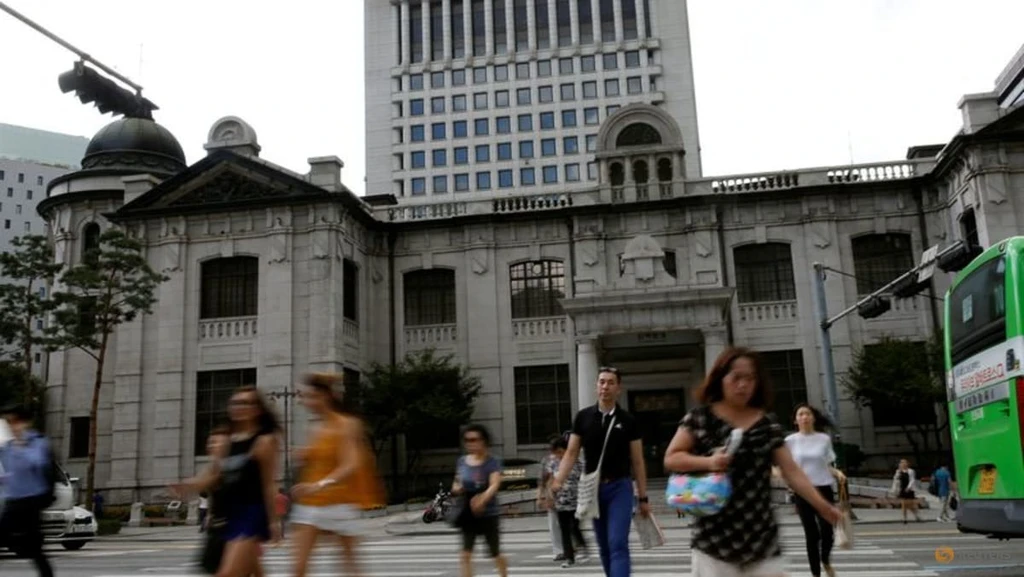
The Bank of Korea is expected to hold its key interest rate steady at 2.50% on Thursday and throughout the year, according to a Reuters poll. Policymakers are closely monitoring the impact of escalating geopolitical conflicts, particularly the Iran war, on domestic cost pressures.
Oil prices have surged over 50% since the conflict began, posing risks to both economic growth and inflation. South Korea, a major oil importer, relies heavily on the Gulf region for its supply, making it vulnerable to price shocks.
While the central bank previously signaled rates would remain at 2.50% until at least August, current inflation has risen to 2.2% in March, slightly exceeding the bank's 2% target. The Korean won has also weakened significantly against the dollar, further fueling inflation concerns.
Economists polled predict inflation to average 2.4% in 2026, surpassing the central bank's target. While the majority expect no rate changes through 2026, some anticipate a modest increase. The Bank of Korea is likely to adopt a cautious monetary policy, balancing growth concerns with upside risks to inflation.