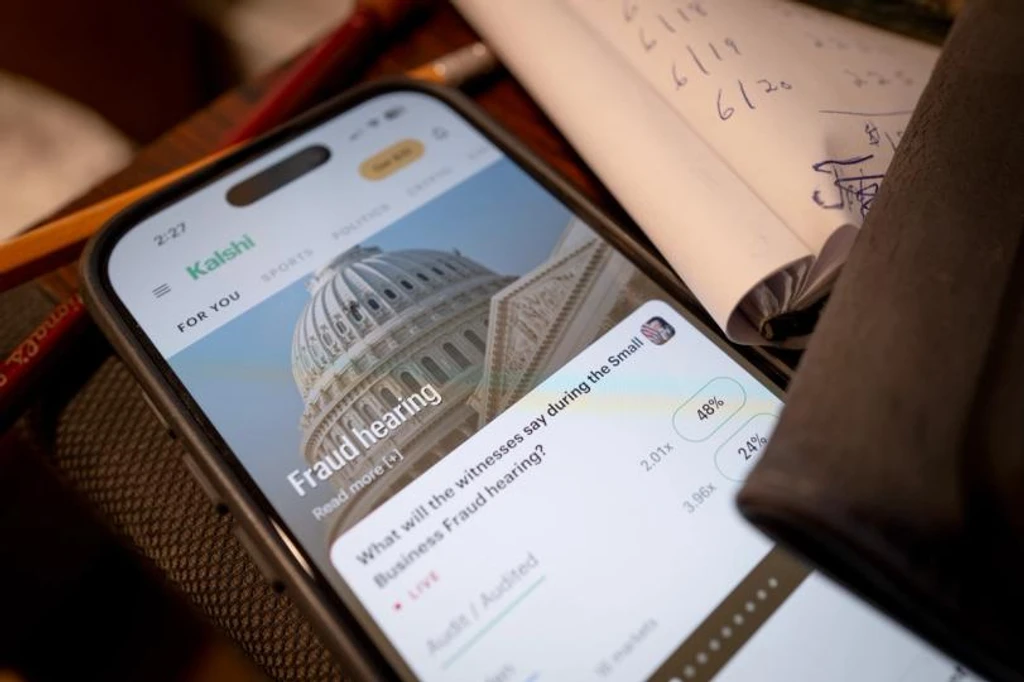
Kalshi now commands an overwhelming 89% of the U.S. prediction market, as a high-stakes legal battle between federal regulators and individual states looms. This conflict will determine if these platforms are classified as sophisticated financial instruments or simply another form of gambling.
A new report from Bank of America indicates steady growth in U.S. prediction markets, with Kalshi, a federally regulated exchange, leading gains. The platform's dominance highlights a market consolidating around entities with clear regulatory standing.

This market shift reflects a deeper tension: whether prediction markets are financial tools or gambling. Kalshi operates under the Commodity Futures Trading Commission (CFTC), framing its contracts as derivatives. In contrast, Polymarket, a crypto-native platform, has historically operated outside U.S. regulatory boundaries.
Nevada and Massachusetts have obtained preliminary injunctions against Kalshi at the state level, while New Jersey's appeal to enforce gambling laws was limited. Meanwhile, the CFTC has aggressively supported prediction markets, arguing federal law preempts state gambling rules. The CFTC distinguishes event contracts as financial tools for hedging risk, unlike sports betting, which it views as entertainment.
The outcome of this regulatory fight could define the industry. A federal victory would allow platforms like Kalshi to scale nationally. A loss could force a state-by-state model, potentially slowing growth. Crypto firms like Polymarket continue to attract attention, and exchanges like Binance are integrating prediction market features.