Building things in America again carries a staggering price tag. McKinsey Global Institute’s latest research estimates the US needs roughly $2 trillion in capital expenditure just to replace imports of strategically vulnerable manufactured goods.
That sum is equivalent to about 6% of GDP-roughly two full years of the current US defense budget. And that only covers new factories and production lines. Workforce training, infrastructure upgrades, and energy supply expansions cost extra.
The Scale of the Problem
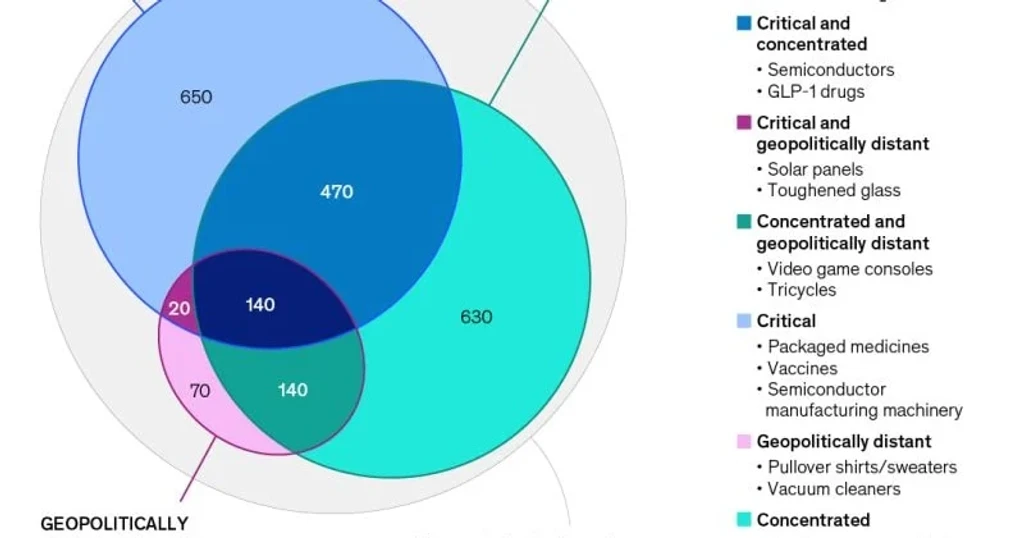
The US imports approximately $3 trillion worth of manufactured goods each year. McKinsey found about 25% of those imports qualify as “Achilles’ heels”-products dependent on concentrated supply chains with meaningful geopolitical risk.
Replacing those imports would require roughly doubling current domestic production capacity. McKinsey’s “ramp-up factor” for most goods sits around 2x. But for some categories, the numbers get alarming: some active pharmaceutical ingredients need production increases exceeding 5x, and AI servers would require capacity scaled up by more than 10x.
Reshoring: Momentum vs. Reality
The report acknowledges tariff-driven supply chain shifts in 2025 nudged companies toward domestic production. But McKinsey is blunt: current efforts are woefully inadequate compared to what’s needed. Operational hurdles around workforce, energy, and infrastructure are more challenging than the financing.
What This Means for Investors
A $2 trillion capex wave would reshape investment flows. Advanced manufacturing technology companies are obvious beneficiaries. The 10x ramp-up for AI servers signals massive demand for domestic semiconductor and data center infrastructure.
The pharmaceutical supply chain is arguably the most vulnerable sector identified. Companies solving operational bottlenecks-not just financing ones-are best positioned.