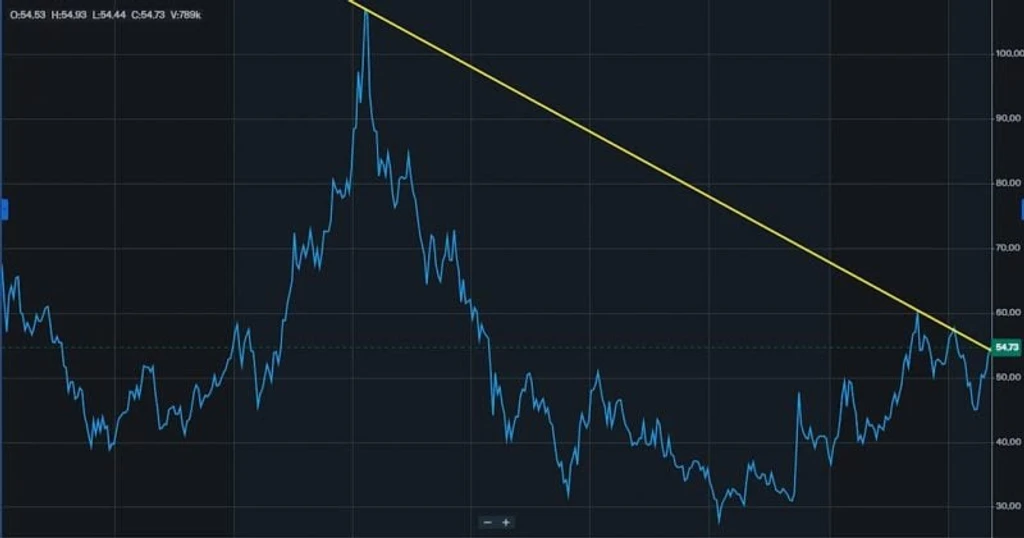
NASDAQ 100 futures dropped roughly 1% after US April inflation data came in slightly above what Wall Street was expecting. The Consumer Price Index rose 3.8% year-over-year and 0.6% month-over-month, numbers that looked close to consensus but carried just enough upside surprise to rattle an already nervous market.
The headline CPI figure topped the anticipated 3.7%, marking the highest annual reading since May 2023. Core CPI, which strips out food and energy, climbed to 2.8% year-over-year, beating the 2.7% forecast and hitting its highest level since September 2025.
The selloff wasn’t limited to the NASDAQ 100. S&P 500 futures slid around 0.4%, while Dow futures dipped a more modest 0.1%. European markets also fell, with Germany’s DAX down 1.22%, the Euro Stoxx 50 losing 1.08%, France’s CAC declining 0.72%, and the UK’s FTSE 100 dropping 0.41%.
The 3.8% headline number represents a meaningful acceleration from recent trends. Underlying energy price pressures, potentially linked to geopolitical tensions including disruptions near the Strait of Hormuz, appear to be filtering through to broader consumer prices.
Core CPI hitting 2.8% is arguably the more concerning data point. The Fed watches core inflation closely because it strips away volatile food and energy components to reveal underlying price trends. At 2.8%, core inflation is moving in the wrong direction, and it’s now at its highest since September 2025.
Investor Michael Burry, famous for betting against the housing market before the 2008 financial crisis, has been warning about the potential for significant declines in the NASDAQ 100 due to what he sees as overvalued tech stocks. Inflation data that keeps the Fed on hold, or worse, pushes rate cut expectations further into the future, is exactly the kind of catalyst that could validate those concerns.