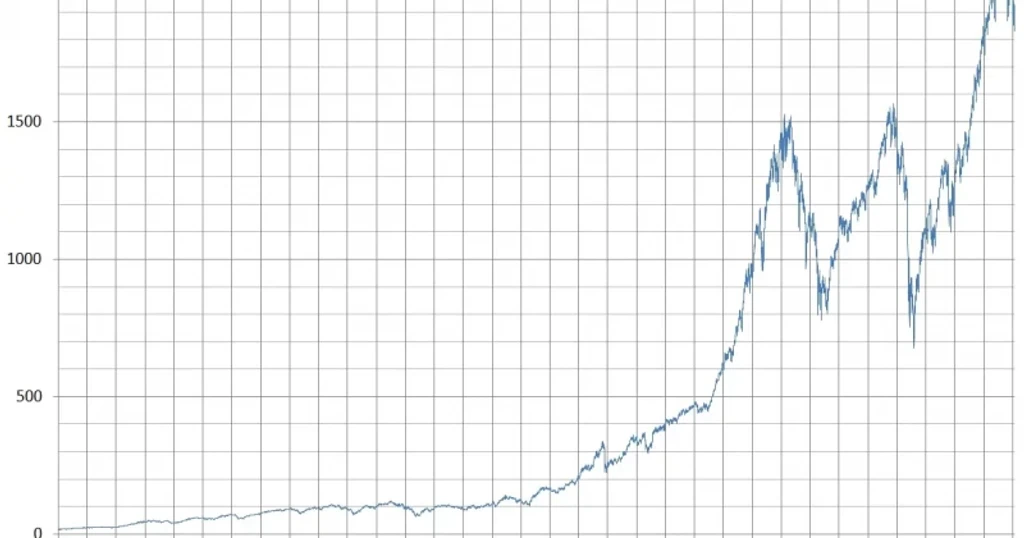
The S&P 500 has surged roughly 130% since January 2020, reaching record highs. At the same time, the University of Michigan Consumer Sentiment Index has plunged to 44.8 in May 2026, the lowest reading ever recorded.
The sentiment reading fell from 49.8 in April and 52.2 a year ago, marking three consecutive months of decline. Lower-income households and those without college degrees are feeling the most pain. In the same survey, 57% of respondents said high gasoline prices are hurting their finances, a pressure linked to the ongoing Iran conflict and its ripple effects on energy markets.
Year-ahead inflation expectations have risen to 4.8%, meaning consumers expect conditions to worsen. Analysts describe the gap between consumer sentiment and market performance as the widest on record.
For someone with a diversified portfolio, the post-2020 era has been extraordinary. A dollar invested in the S&P 500 at the start of 2020 is now worth about $2.30.
Bitcoin and Ethereum have largely mirrored the S&P 500's upward trajectory, benefiting from the same liquidity conditions and risk-on sentiment. The key trigger to watch is consumer spending. When 57% of consumers say gas prices are hurting their finances and inflation expectations sit at 4.8%, the runway for maintaining spending levels gets shorter.