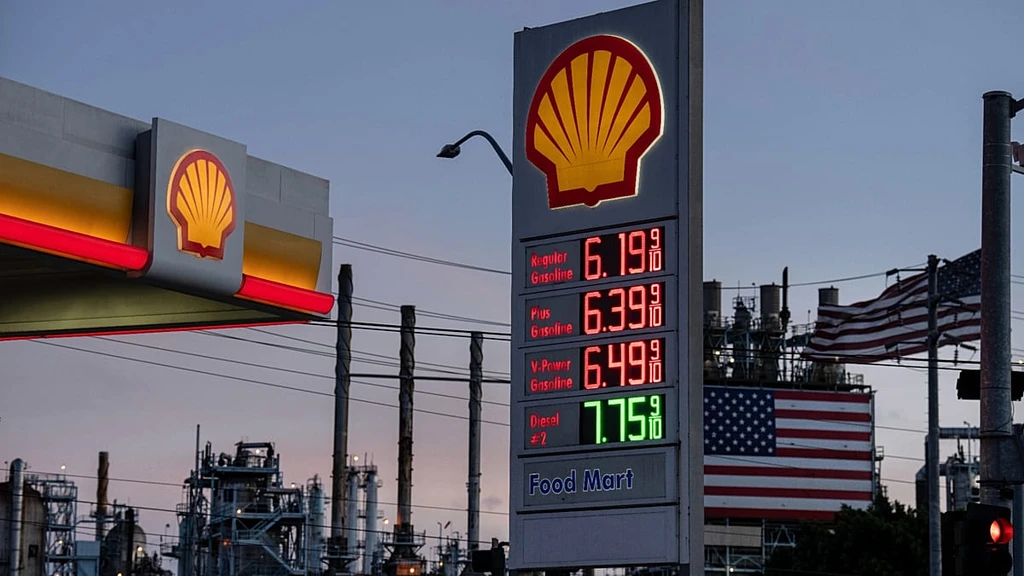
Shell plc reported stronger-than-expected first-quarter earnings, with adjusted income rising to $6.9 billion from $3.3 billion in the previous quarter. The surge was driven by the Iran war pushing up oil and gas prices and boosting trading profits, offsetting conflict-related production declines.
CEO Wael Sawan credited the results to "relentless focus on operational performance in a quarter marked by unprecedented disruption in global energy markets." Shell announced a 5% dividend increase and a $3 billion share buyback program.
Oil prices jumped from roughly $70 a barrel before the war to a peak of $126, the highest in over four years, before retreating below $100 on hopes of a US-Iran diplomatic breakthrough.
Around 20% of Shell's production comes from the Middle East, leaving it exposed to prolonged disruption. Gas production in Qatar is expected to fall at least 30% in the second quarter, though assets in Oman remain operational. The recent acquisition of ARC Resources Ltd., a Canadian shale producer, is seen as a strategic move to boost production growth.
The profit jump has reignited debate in the UK over extending the windfall tax on energy earnings. Shell shares fell about 2% on the results, driven by macro concerns over potential reopening of the Strait of Hormuz.