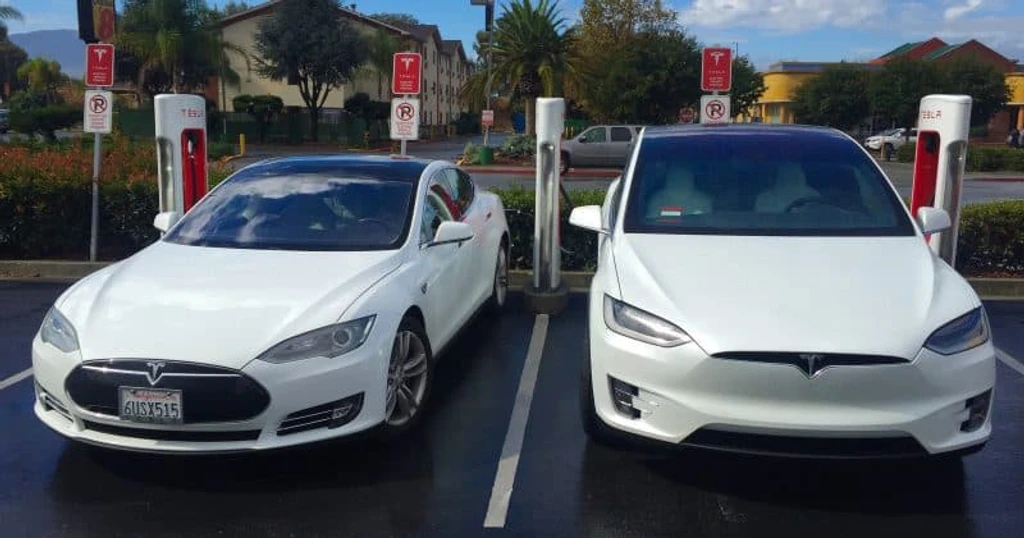
Tesla shares jumped after the company released a long-awaited update to its Full Self-Driving software, reinforcing a pattern where its stock price movements are increasingly tied to its autonomous driving technology, not just vehicle sales.
Analysts estimate that roughly 77% of Tesla's market capitalization is tied to the successful deployment of its autonomy technologies. This underscores a broader truth about the company's valuation.
Tesla's approach to self-driving has always been software-first. The company pushes incremental improvements to its fleet through over-the-air updates, rather than waiting for a finished product.
Version 13 of FSD began rolling out to customers in December 2024, marking a significant milestone. That release helped fuel a wave of investor optimism that carried into early 2025.
In April 2025, TSLA surged 9.8% following regulatory updates from the US Department of Transportation. More recently, a Spring 2026 update introduced AI-powered features designed to further enhance the software's capabilities.
However, a hardware challenge looms. In April 2026, Tesla acknowledged that millions of vehicles equipped with Hardware 3 will need physical hardware upgrades to fully utilize unsupervised FSD capabilities.
Software updates scale instantly across the entire fleet. Hardware upgrades require service appointments, physical components, and either Tesla absorbing the cost or customers paying for it. The company hasn't detailed the cost structure or timeline for these upgrades.
The 77% valuation figure tied to autonomy assumes Tesla can scale FSD across its entire fleet. If a significant portion of that fleet needs expensive retrofits, the timeline and margins become less certain.
Tesla's ambitions extend beyond selling FSD as a feature. The company is laying groundwork for a robotaxi service, where autonomous Teslas would operate as a ride-hailing fleet, generating recurring revenue.
The competitive landscape is getting crowded. Waymo, backed by Alphabet, already operates commercial robotaxi services in multiple US cities. Cruise remains in the race despite setbacks. Chinese competitors like Baidu's Apollo are advancing rapidly.
For investors, the bull case is clear: if Tesla delivers on FSD and launches a robotaxi network, the revenue potential dwarfs its car sales. The bear case is equally clear: that 77% valuation dependence on autonomy tech means if FSD hits sustained regulatory or technical roadblocks, the stock is dramatically overvalued relative to its actual car-selling business.
Key metrics to track for TSLA investors are FSD intervention rates, regulatory approvals for unsupervised operation, and any concrete timeline or pricing for the Hardware 3 upgrade program.